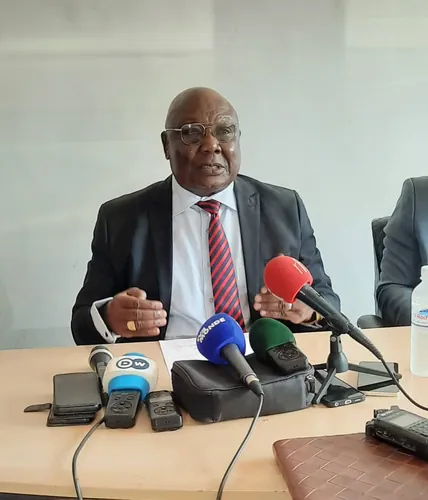
Martin Ziguélé, the former Prime Minister and current president of the Mouvement de libération du peuple centrafricain (MLPC), recently criticized the continued presence of the Wagner group in the Central African Republic. Ziguélé asserted that the forces deployed did not align with the initial defense agreement that he had voted for as an inter-state accord. Instead, he described them as mercenaries, stating that what ultimately arrived in the country did not correspond to the original inter-state defense agreement. He stated, "Wagner n’a rien à faire dans un État de droit," emphasizing his view that such private armed groups are incompatible with a rule-of-law state and the normal functioning of institutions.
Ziguélé advocates for the Central African Republic to prioritize direct state-to-state relations with Russia rather than engaging with private military entities. He dismissed arguments attempting to distinguish between Wagner and other Russian-backed groups, remarking, "c’est blanc bonnet et bonnet blanc," suggesting they are effectively the same in their operational nature and impact. His comments highlight a clear preference for formal governmental cooperation over arrangements involving non-state actors, showing his belief that the Central African Republic must favor state-to-state relations with Russia, not with private armed groups.
Wagner's Unofficial Operations
Martin Ziguélé stated that Russian Foreign Minister Sergueï Lavrov had previously described Wagner as a private structure established by Evgueni Prigojine for private military security activities, operating without a direct link to the state. According to Ziguélé, Wagner functions not merely as a security provider but also as a commercial enterprise, an influence and information manipulation structure, and an economic organization. He asserted that Wagner expanded its influence significantly following its military intervention against the Patriots for Change (CPC) coalition in December 2020, solidifying its presence and operational scope within the country.
Ziguélé claimed Wagner played a direct role in the constitutional reform process, the organization of the referendum, and recent elections, which he characterized as exclusive processes that lacked broad participation. He maintained that the presence of mercenaries fundamentally contradicts the principles necessary for the normal functioning of institutions in a state governed by law. Ziguélé observed that Wagner's public visibility in Bangui has decreased in recent months, suggesting a more discreet operational profile. However, he expressed conviction that the group remains present for security matters, citing their involvement in significant state events such as the presidential investiture, indicating their continued, albeit less overt, influence.
Shifting Alliances and Diplomacy
Martin Ziguélé stated he voted in favor of the defense agreement established between the Central African Republic and Russia, emphasizing its nature as an inter-state accord. This position emerges as President Faustin-Archange Touadéra has reportedly adjusted the nation's foreign policy, signaling a strategic reorientation. Touadéra's administration has shifted from a previously strong alignment with Russia toward improving relations with France and engaging more closely with international financial institutions, seeking to diversify the country's international partnerships.
Ziguélé views the potential replacement of the Wagner group with the entity known as Afrika Korps as fundamentally the same phenomenon. He described it using the French idiom "blanc bonnet et bonnet blanc," indicating that despite a change in name or personnel, the underlying nature of the private military involvement remains unchanged. This perspective reinforces his consistent preference for formal state-to-state agreements over arrangements involving private military companies, which he sees as detrimental to national sovereignty and legal principles. He maintains that mercenaries, regardless of their specific branding, contradict the principles of normal functioning of institutions in a state of law.
Political Stance and Future Vision
Martin Ziguélé, former Prime Minister and current president of the Mouvement de libération du peuple centrafricain (MLPC), has authored the book 'Des crises à l’espérance – Ma vision pour la Centrafrique'. In his political outlook, Ziguélé emphasizes the necessity for the Central African Republic to pursue equilibrium in its international relations. He advocates for diversifying partnerships while consistently upholding national interests, believing this approach is key for long-term stability and development.
Ziguélé views the presence of private military entities like Wagner as incompatible with a state governed by law. He has stated, "Wagner n’a rien à faire dans un État de droit," reiterating his firm stance against their involvement in national affairs. He maintains that any potential replacement, such as the Afrika Korps, represents the same underlying issue, remarking, "c’est blanc bonnet et bonnet blanc." This perspective shows his call for formal, state-to-state agreements rather than engagements with private military companies, which he considers to be a deviation from established legal and governmental norms. Ziguélé is currently concluding his second term as a deputy, having chosen not to seek re-election in the most recent legislative elections, indicating a potential shift in his political focus while continuing to voice his concerns on national policy.