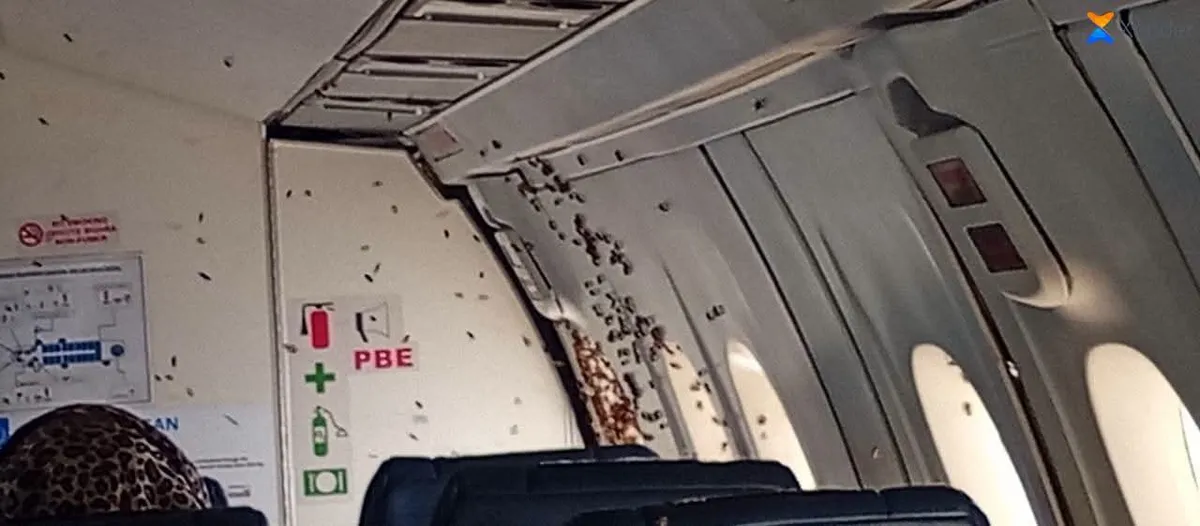
A United Nations humanitarian plane (HUNAS) made an emergency landing in Bambari, Central African Republic, on Monday, August 31, 2026, after experiencing a bee intrusion inside its cabin. The aircraft was traveling from Bangui to Bangassou when the incident occurred over the Ouaka region. The pilot decided to land in Bambari to ensure the safety of the passengers aboard the flight. The aircraft encountered an intrusion of several bees inside the cabin, prompting the unscheduled landing. This unusual event unfolded while the plane was flying over Bambari, a key location within the Ouaka region of the Central African Republic. The decision to land was made swiftly to address the unexpected situation and prioritize passenger well-being.
Safe Landing and Evacuation
No passengers sustained injuries during the unexpected incident, according to reports. This key detail showed the successful handling of the emergency by the flight crew. Following the emergency landing in Bambari, all passengers were safely evacuated from the aircraft. This immediate action ensured their security and allowed ground personnel to address the situation on board. Simultaneously, efforts were undertaken to remove the bee infestation from the plane's interior. Specialized teams were brought in to meticulously clear the aircraft of the insects. After the evacuation, the humanitarian plane underwent a thorough cleaning and disinfection process. This procedure was implemented to ensure the aircraft was entirely clear of any remaining bees or contaminants, guaranteeing a safe and hygienic environment for its continued journey. The United Nations plane then resumed its flight path to Bangassou after these necessary safety measures were completed, demonstrating the efficiency of the response.
Flight Resumed and Arrival
The United Nations humanitarian plane ultimately arrived at its destination, Bangassou, around 2:10 PM. The flight had departed Bangui earlier in the day, experiencing an unexpected diversion to Bambari due to a bee infestation within the cabin. The unscheduled stop in Bambari was a critical safety measure, allowing for the full resolution of the incident. After the emergency landing in Bambari, passengers were safely evacuated, and the aircraft underwent a thorough cleaning and disinfection process to remove all bees. This careful process was essential before the journey could continue. The crew then prepared the plane for its resumed journey, ensuring all systems were checked and the cabin was secure. The successful completion of the flight ensured that the humanitarian mission could proceed as planned, delivering personnel or supplies to the Bangassou area despite the unusual delay. The arrival at Bangassou marked the successful conclusion of a flight that had faced an unforeseen challenge.
Context of Humanitarian Flights
The United Nations operates regular humanitarian flights throughout the Central African Republic, connecting key cities and remote areas. These flights are key for the movement of personnel, aid workers, and essential supplies to regions often difficult to access by road due to security concerns or poor infrastructure. The challenges of ground transport in the country make air services indispensable for humanitarian operations. Such operations facilitate the delivery of humanitarian assistance, medical support, and development programs across the country, reaching vulnerable populations who might otherwise be cut off from vital aid. The flights originate from hubs like Bangui, the capital, and serve destinations including Bangassou, a significant urban center in the southeastern part of the country. Bangassou's strategic importance makes it a frequent destination for these aid missions. These air services are a vital component of the broader humanitarian response, enabling organizations to reach vulnerable populations and support ongoing relief efforts with efficiency and safety. The Nations-unies aircraft are specifically designated for these humanitarian missions, ensuring continuity of aid delivery in challenging environments. Their operations are designed to maintain a consistent presence and provide rapid response capabilities where ground transport is impractical or unsafe, showing their critical role in the region's humanitarian landscape. The incident, while unusual, noted the strong safety protocols in place for these essential flights.