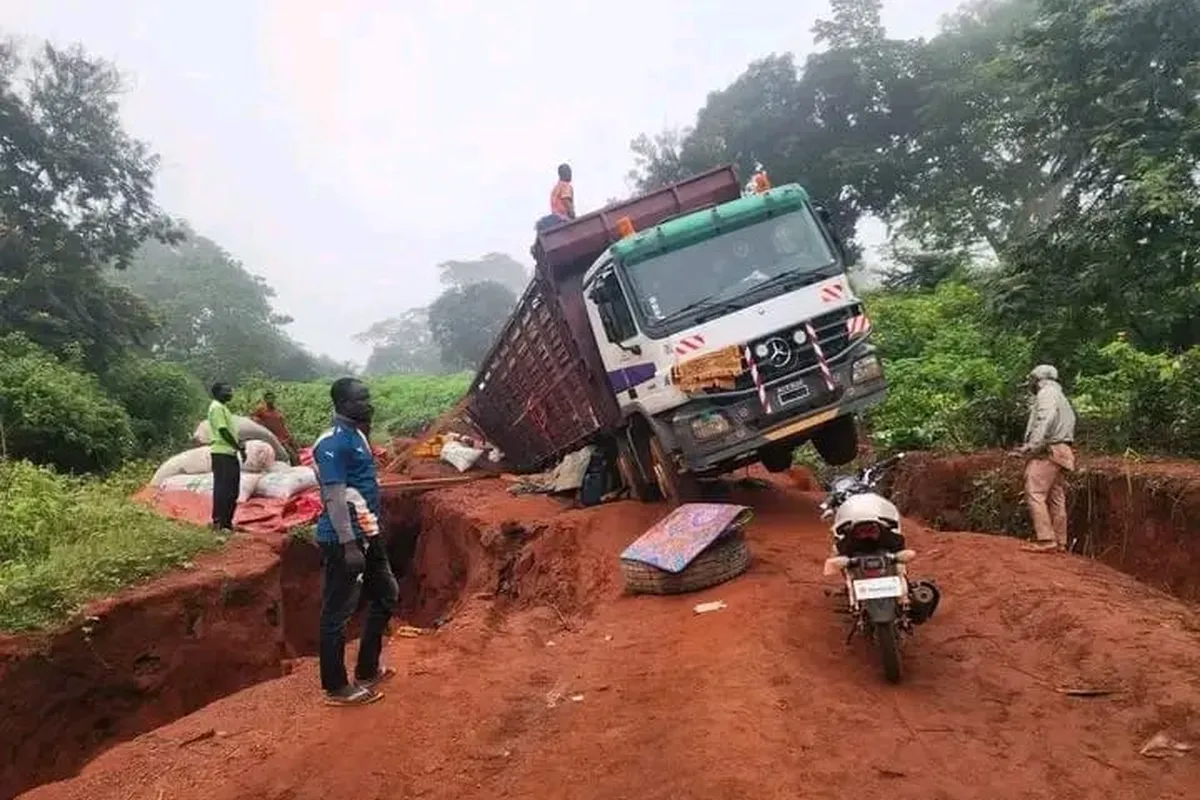
A truck traveling from Berbérati overturned on the evening of September 12, 2026, approximately three kilometers from the prefecture of Carnot, in the Ndjembe neighborhood, severely disrupting traffic. The incident occurred around 9 PM as the vehicle approached the town of Carnot, immediately cutting off passage on the vital axis connecting Carnot to Berbérati. The overturned truck created significant difficulties for commuters and temporarily prevented the normal circulation of other vehicles on this busy road. The obstruction has made travel challenging along this key route in the Central African Republic. The truck had been on its way from Berbérati, destined for Carnot, when the incident occurred. Its presence on the road effectively blocked the main artery connecting these two significant urban centers, causing immediate logistical problems for all road users.
Journey's Difficulties Detailed
The journey from Berbérati reportedly spanned nearly two days due to the road's particularly degraded condition. Travelers along this route frequently encounter sections where several portions are heavily deteriorated, making passage challenging and often hazardous. The road connecting Carnot and Berbérati has become notably difficult to traverse, contributing to the extended travel times and increasing the risks associated with road transport. This severe degradation forces vehicles to navigate treacherous stretches, often at extremely reduced speeds, which significantly prolongs transit times.
The prolonged hours required to cover the distance between these two cities significantly complicate the transport of goods, passengers, and agricultural products. Transporters sometimes allocate several days to complete journeys that would take considerably less time if road conditions were optimal and roads were passable. This degradation directly impacts both goods and people movement, creating a ripple effect across local economies. It leads to increased travel costs for both individuals and businesses, as fuel consumption rises and vehicle wear and tear accelerate. It slows economic exchanges between urban centers, hindering the timely delivery of agricultural products from farming communities to major cities where they are in demand. The extended travel times also affect the perishable nature of some goods, leading to potential losses for producers and traders.
Regional Road Network Challenges
Carnot serves as the capital of the Mambéré prefecture, while Berbérati is the capital of the Mambéré-Kadéï prefecture, establishing their significance as regional administrative and economic hubs. The severe degradation of the main axis connecting these two cities has significantly penalized a substantial portion of trade in the western Central African Republic. This poor road condition impacts the movement of goods and people, hindering economic activity and connectivity in the region. The difficulty of transporting goods efficiently between these two key prefectural capitals has broader implications for regional supply chains and market access. Businesses face higher operational costs, and consumers often bear the brunt of increased prices due to these logistical challenges.
Given the deteriorating state of these roads, motorcycles and motorcycle taxis are increasingly playing a critical role in local travel. Their agility allows them to navigate sections that are impassable or extremely difficult for larger vehicles, providing a vital, albeit often less safe, alternative for many residents. Across several regions of the Central African Republic, users consistently report advanced road degradation and substantial circulation difficulties between major cities and interior localities. These challenges are not isolated, as travel remains difficult on multiple axes in the east, north, and west of the country, painting a picture of systemic infrastructure deficiencies. For many inhabitants, motorcycles and motorcycle taxis have become one of the primary means of transport on routes where larger vehicles must advance with considerable difficulty, often at extremely slow speeds, sometimes barely exceeding walking pace. This reliance on smaller, more adaptable transport notes the systemic issues affecting the country's road infrastructure and the urgent need for investment and maintenance. The inability of conventional transport to reliably traverse these routes shows the depth of the infrastructure crisis, impacting everything from emergency services access to daily commerce.
The persistent poor state of these roads also contributes to higher maintenance costs for vehicle owners and commercial transport companies. Frequent breakdowns and damage due to potholes, erosion, and uneven surfaces are common occurrences, further straining financial resources in a country where economic conditions are already challenging. This cycle of damage and repair adds another layer of difficulty for those attempting to maintain essential transport links. The overall impact extends beyond mere inconvenience, affecting public health, education, and access to essential services, as timely travel becomes unpredictable and often impossible.
Accident Adds to Daily Woes
The accident near Carnot on September 12 adds to a series of daily difficulties encountered by users of Central African roads. Road conditions across the country frequently present obstacles for both commercial and private transport, making routine journeys into arduous undertakings. The persistent degradation of key routes means that incidents, such as the recent truck overturn, compound an already challenging travel environment, increasing the risk of further accidents and delays. This situation affects the daily lives of citizens who rely on these roads for commerce, access to services like healthcare and education, and personal movement. Many drivers and commuters regularly navigate stretches of road that are poorly maintained, leading to increased travel times, higher risks of vehicle damage, and a greater propensity for accidents. The incident near Ndjembe further shows the operational challenges faced by transporters and individuals traveling between towns like Berbérati and Carnot, where road infrastructure issues are a common complaint and a significant impediment to regional development and daily life. It serves as a stark reminder of the precariousness of travel on many of the nation's key arteries.