Faustin-Archange Touadéra, President of the Central African Republic, unveiled the composition of his ministerial team on Thursday, May 21, 2026. A decree confirmed the complete reconduction of the previous government, signaling continuity in the nation's leadership. This cabinet renewal, dubbed "Moloua 3," marks the beginning of a period that could extend Prime Minister Félix Moloua's tenure to seven years. The decision to maintain the existing team indicates President Touadéra's intention to continue with his current political direction, reinforcing the perception of a stable, if unchanging, administrative course. The formal announcement on Thursday solidified the expectations that had been circulating within political circles.
Key Portfolios Unchanged
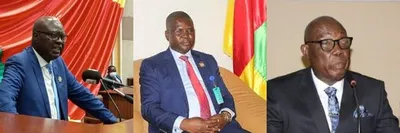
Several key ministerial positions within the Central African Republic's government have been maintained, emphasizing the administration's commitment to stability. These include the critical portfolios for Finance, Defense, Justice, Transport, and the General Secretariat of the government. The retention of these central figures suggests a deliberate strategy to avoid disruption in core government functions. This continuity extends to Hassan Bouba, who remains part of the executive cabinet. Mr. Bouba's continued presence is notable given that he is formally sought by the Special Criminal Court. His retention shows the President's prerogative in selecting his team, even in the face of external scrutiny. The decision to keep these high-profile ministers in place signals a clear message of unwavering policy direction from the presidency.
Russian Advisors' Influence
The newly announced cabinet is referred to as "Moloua 3," indicating its continuity with previous administrations under Prime Minister Félix Moloua. This nomenclature notes a discernible pattern of consistent leadership under Moloua, whose extended tenure is a key feature of the current political landscape. The stability of the government had been largely anticipated, with Podolski, a Russian mercenary and advisor to President Touadéra, stating on RT television on February 7, 2026, that there would be no major changes for the new mandate. Podolski's comments, made months in advance of the official announcement, noted the expectation of an unchanged political trajectory and hinted at the significant influence foreign advisors hold within the presidency. Simplice Mathieu Sarandji has also been maintained in his role as president of the National Assembly. This decision further reinforces the administration's commitment to continuity across key governmental branches, extending beyond the executive to the legislative arm. The consistent maintenance of these figures suggests a cohesive strategy for governance, potentially influenced by external counsel.
Public Resentment and Past Precedents
Public resentment in the Central African Republic is reportedly growing due to the unchanged government structure and the prevailing economic situation. This sentiment follows President Touadéra's decision to maintain the full cabinet, dubbed "Moloua 3." The lack of new faces or significant policy shifts in the cabinet has contributed to a growing dissatisfaction among the population, who may have hoped for fresh approaches to national challenges. Past governmental actions have sometimes met with public and institutional resistance, illustrating a history of strong responses to perceived threats to presidential authority. For instance, former president of the Constitutional Court, Danièle Darlan, was dismissed after she rejected the 2016 constitutional revision project. Such actions highlight a precedent for strong governmental responses to challenges to its proposed policies and structures, showing the potential for friction between the administration's continuity agenda and public expectations for change. This historical context provides insight into the potential dynamics of governance under the "Moloua 3" cabinet.