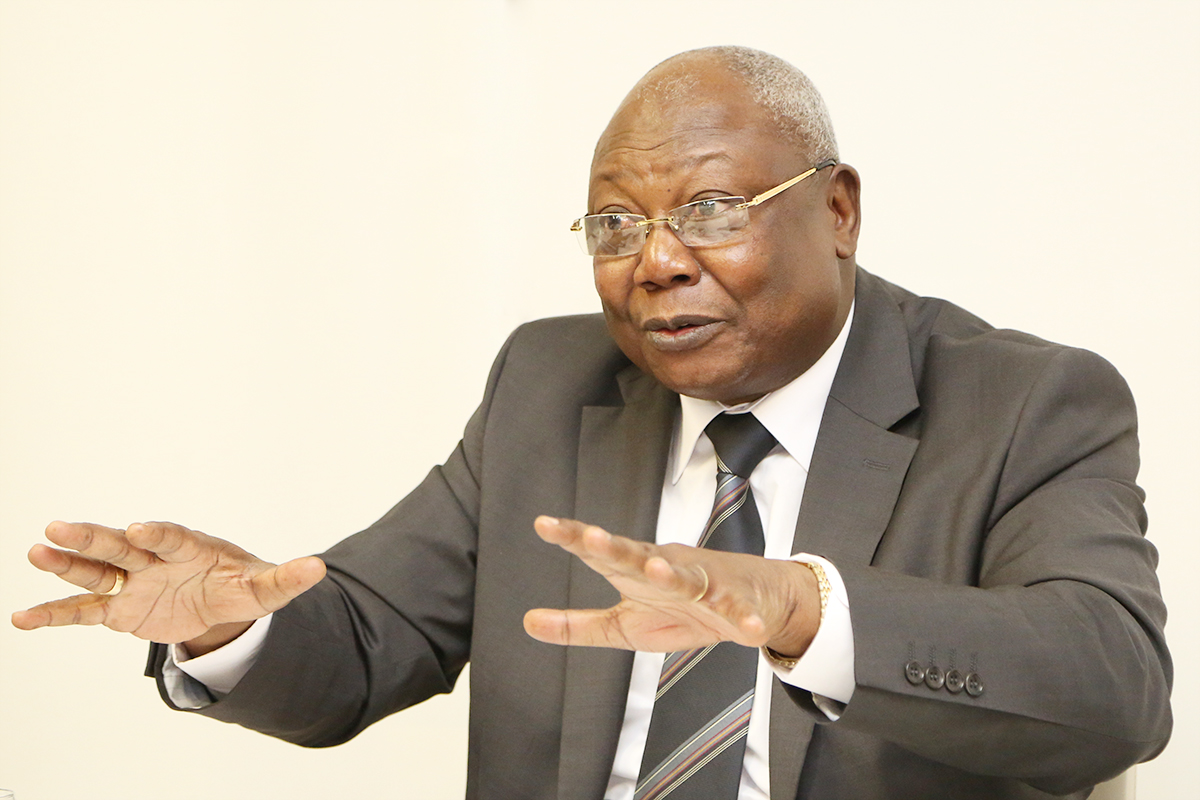
Sociologist and political analyst Faustin Zaméto recently analyzed the 44% global pass rate for the Baccalauréat 2026, linking the low success rate to systemic inequality within the educational system. Zaméto, who uses the theories of Pierre Bourdieu to interpret the results, asserted that not all candidates begin the competition with comparable resources. He specifically noted that students do not start with the same "« craie en main »" (chalk in hand), implying unequal access to fundamental educational tools and opportunities. Zaméto further elaborated that the state's influence, which he termed "« capital étatique »," disproportionately benefits certain social groups, perpetuating disparities in academic outcomes. As a sociologist and political analyst, Zaméto's perspective emphasizes the broader societal structures that shape individual educational experiences and outcomes.
Exam Rigor and Technological Capital
Faustin Zaméto's analysis of the Baccalauréat 2026 pass rate specifically examines exam rigor, the use of phones by candidates, and the government's announced recruitment of 1,500 teachers. These three areas form the core of his critical assessment of the recent examination results. Minister of State Aurélien Simplice Kongbelet-Zingas addressed the rigor applied to the exams, noting efforts to combat fraud and the confiscation of mobile phones. The Minister's statements showed the government's commitment to maintaining the integrity of the examination process. Zaméto posits that this rigorous approach to examinations helps the state uphold the diploma's perceived value, suggesting that a reduced pass rate could be interpreted as a direct outcome of stricter oversight. He argues that by making the exam more challenging or by rigorously enforcing anti-fraud measures, the state reinforces the prestige and perceived difficulty of obtaining the Baccalauréat.
Zaméto further observes that Android phones utilized during exams represent a type of technological capital, which he believes can potentially offset existing educational disadvantages among students. He views these devices not merely as tools for cheating but as resources that some students might leverage to bridge gaps in their learning or access information. He views the state's practice of destroying confiscated phones as an act of symbolic violence. For Zaméto, this destruction goes beyond mere disciplinary action; it signifies a state-sanctioned removal of a potential resource that could otherwise empower students, particularly those from less privileged backgrounds. The sociologist argues that while the state aims to maintain the integrity of the Baccalauréat, the methods employed, such as phone destruction, carry implications beyond mere anti-fraud measures, reflecting deeper power dynamics within the educational system. This perspective aligns with his broader assertion that systemic inequalities are exacerbated by state actions and resource distribution, hindering some students from fully participating in the educational landscape.
Teacher Recruitment and Regional Disparities
The government's announcement of recruiting 1,500 teachers, made on the instruction of President Faustin-Archange Touadéra, is also part of the sociologist's analysis. This significant recruitment drive signals an official recognition of the need to bolster the educational workforce. Sociologist Faustin Zaméto interprets this measure as an attempt to address existing inequalities. He believes the teacher recruitment initiative specifically aims to reduce disparities between different regions of the country, where access to qualified educators can vary significantly. This effort, according to Zaméto, reflects an acknowledgment of uneven educational resource distribution, which contributes to varied outcomes in national examinations like the Baccalauréat. He suggests that such targeted interventions are necessary to mitigate the systemic disadvantages faced by students in underserved areas, potentially impacting future pass rates by providing more equitable access to qualified educators. The successful deployment of these new teachers, Zaméto implies, could be a key step towards leveling the playing field for students across the nation.
Social Conditions and Unequal Capital
Sociologist Faustin Zaméto's analysis of the Baccalauréat results extends to the broader social conditions impacting student performance. He observed that the global pass rate for the Baccalauréat 2025 stood at 46.26%, a figure he examines in relation to systemic factors. This comparison between the 2025 and 2026 rates allows him to frame the current results within a broader trend of educational outcomes. Zaméto contends that the requirements placed upon students by the educational system are intrinsically linked to the social environments and conditions in which these students are raised. He argues that a student's home environment, community resources, and overall socio-economic status fundamentally shape their preparedness and ability to meet academic demands.
He further notes how interruptions in schooling, particularly those caused by crises, can significantly worsen existing disparities within the Central African Republic's educational landscape. Such disruptions, whether due to conflict, natural disaster, or other societal upheavals, disproportionately affect vulnerable populations, leading to prolonged absences and learning deficits. Zaméto asserts that such disruptions create uneven learning trajectories that disadvantage certain student populations more severely than others, making it harder for them to catch up and succeed in standardized examinations. According to Zaméto, academic underperformance, often labeled as "school failure," should not always be attributed solely to a lack of individual effort or diligence on the part of the student. Instead, he argues that it is frequently a direct consequence of the unequal distribution of cultural capital among students, which includes access to knowledge, skills, and resources that are valued by the educational system. This unequal distribution, he maintains, creates an inherent disadvantage for many students before they even enter the examination hall.
Broader Meaning of Educational Outcomes
Sociologist Faustin Zaméto views the Baccalauréat as more than just an examination, describing it as a title that transforms school-acquired skills into a form of cultural capital officially recognized by the state. This recognition, Zaméto argues, confers value and status within society, acting as a gateway to further education, employment, and social mobility. The diploma, therefore, becomes a key marker of an individual's accumulated knowledge and their potential for future success, making the systemic inequalities that influence its acquisition all the more critical to address.