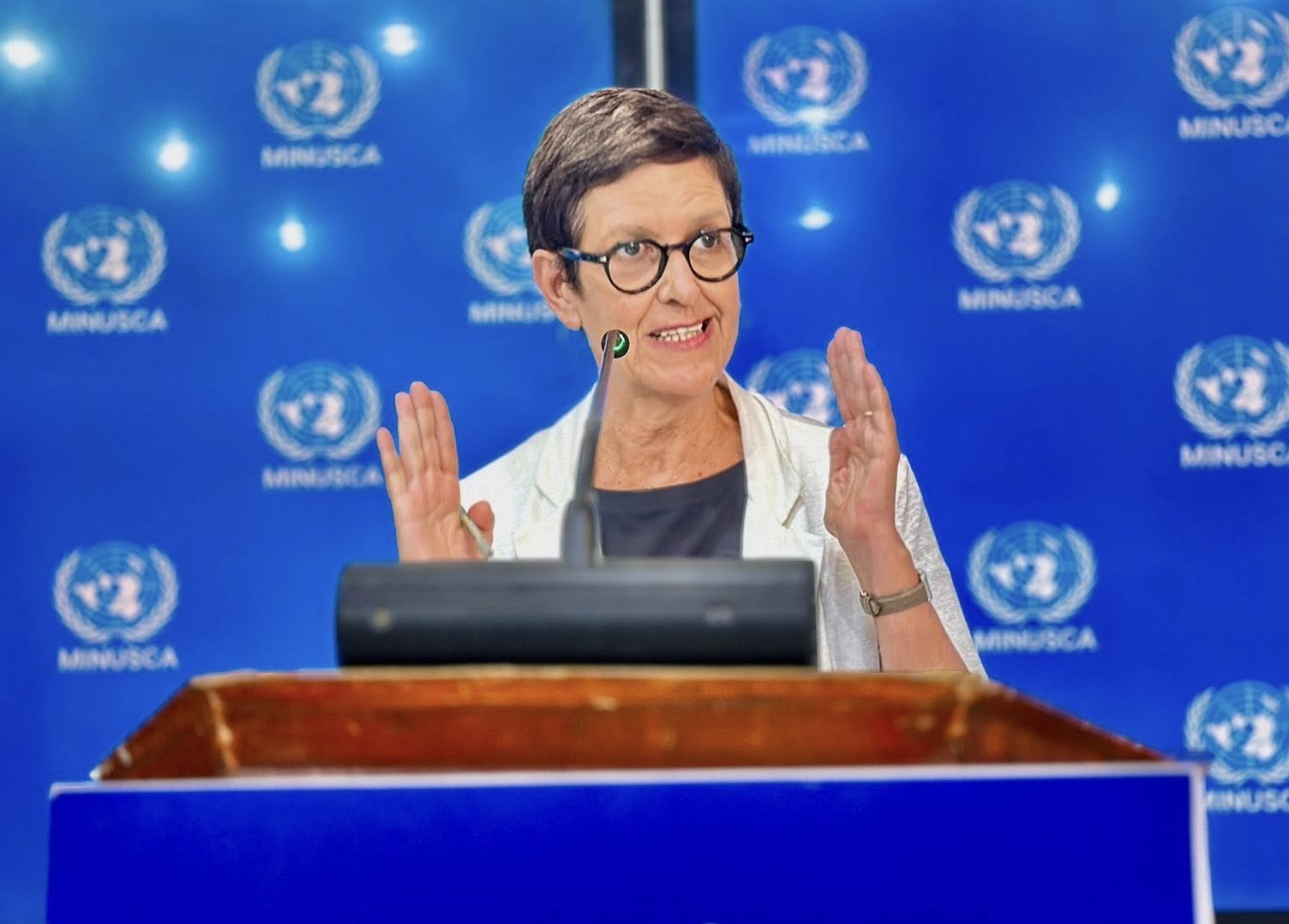
The United Nations Multidimensional Integrated Stabilization Mission in the Central African Republic (MINUSCA) presented a mid-term assessment of its mission on May 6th. This key evaluation, delivered during MINUSCA's weekly press conference in Bangui, evaluated the mission's progress six months after its mandate renewal. The assessment provided an overview of the mission's achievements and challenges, noting its ongoing commitment to stability and peace in the country.
Electoral and Peace Support
The United Nations Multidimensional Integrated Stabilization Mission in the Central African Republic (MINUSCA) has fully fulfilled its mission of supporting the electoral process, according to spokesperson Florence Marshall. Marshall stated that the organization provided full assistance throughout the electoral cycle, ensuring a strong framework for democratic participation. This support included technical expertise, logistical aid for voter registration and polling operations, and security provisions to ensure a peaceful environment for voters free from intimidation. MINUSCA's role also involved facilitating the transportation of electoral materials and personnel to remote areas across the Central African Republic, overcoming significant geographical and infrastructural challenges. The mission's efforts aimed to bolster the country's democratic institutions and ensure the credibility and transparency of the voting process. The organization also acknowledged and saluted the support for the implementation of the Political Agreement for Peace and Reconciliation in the CAR. This agreement, signed in February 2019, represents a key framework for stabilizing the country and fostering lasting peace by addressing the root causes of conflict. MINUSCA noted its continued commitment to aiding the Central African government and other national stakeholders in advancing the tenets of the peace agreement, which includes vital disarmament, demobilization, and reintegration programs essential for long-term security.
Ongoing Base Closures
The United Nations Multidimensional Integrated Stabilization Mission in the Central African Republic (MINUSCA) is continuing the closure of some of its bases across several cities in the country. This ongoing process is part of the mission's strategic realignment, aiming to adapt its operational footprint to evolving security conditions and national needs on the ground. The closures follow a full review of MINUSCA's deployment, which seeks to optimize resource allocation while maintaining its capacity to protect civilians and support the peace process effectively. The mission has been systematically assessing its presence in various localities to determine where its physical bases can be consolidated or decommissioned without compromising its mandate or the security of the population. This initiative reflects a broader effort to gradually transition security responsibilities to national forces, in line with the Central African Republic's stabilization efforts and the gradual strengthening of its own security apparatus.
Mission Mandate Context
The United Nations Multidimensional Integrated Stabilization Mission in the Central African Republic (MINUSCA) operates under a mandate focused on the protection of civilians and the support of the peace process in the Centrafrique. The mission's objectives include assisting the Central African government in extending state authority throughout its territory, promoting human rights, and facilitating the delivery of humanitarian assistance across the RCA to those most in need. MINUSCA's full mandate also encompasses critical security sector reform, disarmament, demobilization, reintegration, and repatriation (DDRR) programs, and the restoration of essential state services. Its presence in cities like Bangui, Bocaranga, and Bouar reflects a commitment to stabilizing the country and fostering an environment conducive to lasting peace and sustainable development. The mission also supports the implementation of the Political Agreement for Peace and Reconciliation in the CAR, an essential framework for national stability and reconciliation that underpins much of its work.