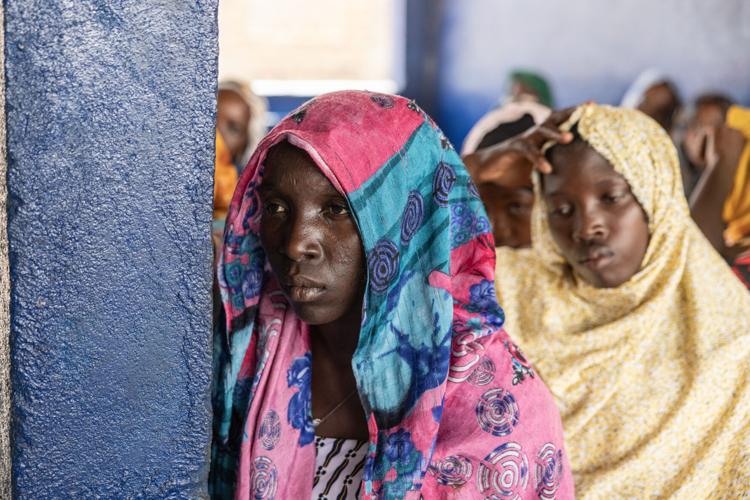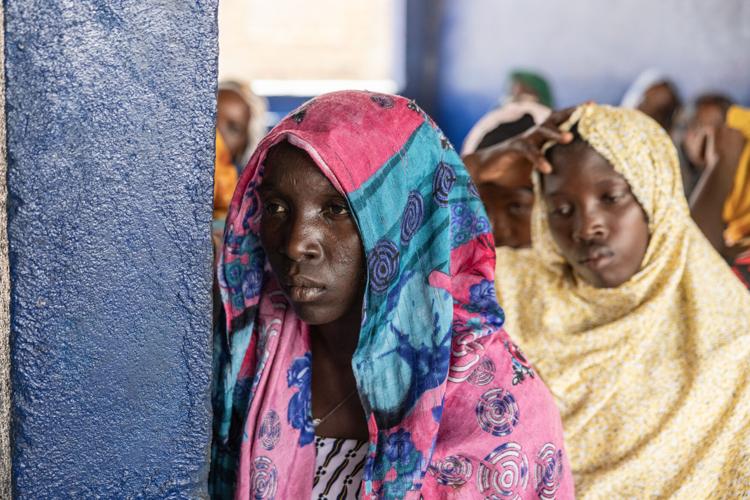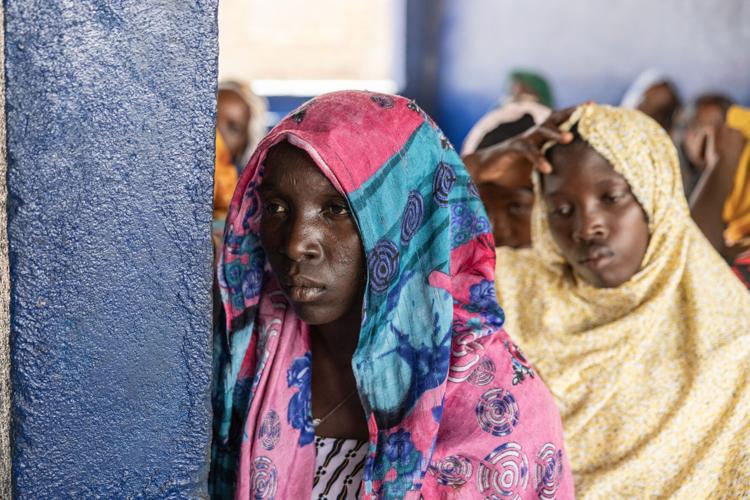
Women in the Central African Republic's Birao District Hospital waited for pre-natal consultations on Thursday, March 26, 2026, as the facility struggles with a surge in patients following the start of the war in neighboring Sudan. These women, many of whom are refugees, sought essential healthcare services amidst overwhelming conditions. The district hospital in Birao serves a population of about 70,000 local residents, alongside an estimated 22,000 Sudanese refugees who have sought safety in the area. The scene at the Birao District Hospital on Thursday, March 26, 2026, with women awaiting their pre-natal consultations, painted a vivid picture of the immense pressure on the healthcare system. The influx of displaced populations has stretched resources to their absolute limit, making it increasingly difficult for the hospital to cater to the growing demand for maternal and child health services.
Maude Ahmad Fadala, a Sudanese refugee, recounted giving birth in the street at the Korsi Refugee Camp in Birao on the same day, Thursday, March 26, 2026. Ms. Fadala, rocking her baby inside the Korsi Refugee Camp, described the harrowing experience. "I gave birth in the street. There was no doctor, no midwife, and no one holding my hand," Fadala stated, cradling her newborn. Her testimony shows the dire lack of medical support available to many displaced individuals. Reports indicated that the number of women arriving daily at the hospital tripled after the conflict in Sudan began in early 2023, placing immense strain on already limited resources and exacerbating the challenges faced by healthcare providers and patients alike. The experience of Ms. Fadala, giving birth without any medical assistance, tragically illustrates the severe consequences of these strained resources and the desperate conditions faced by pregnant women in the refugee camps.
Dire Conditions for Mothers
Over 40% of births in the Central African Republic occur away from medical facilities, according to reports, noting a systemic issue that leaves many mothers without professional medical assistance during one of life's most critical moments. This alarming statistic, where over two-fifths of all births take place outside of a clinical setting, contributes significantly to the high rates of maternal and infant mortality. Conditions remain particularly challenging for refugees, with women and children observed fetching water at dusk in the Korsi Refugee Camp in Birao on Friday, March 27, 2026. This daily struggle for basic necessities further compounds the health risks faced by this vulnerable population. The sight of women and children laboring to fetch water as daylight fades on Friday, March 27, 2026, in the Korsi Refugee Camp shows the widespread challenges, including inadequate sanitation and hygiene, which directly impact maternal and child health outcomes.
Among those in the camp is Katidje Idrisse Tahire, who fled Sudan four months ago. Ms. Tahire recounted making the arduous journey on foot, a trek that has left her physically debilitated. "I am very tired and unwell," she said, describing how her whole body aches from the ordeal. During her escape, she was robbed at the border, losing what little she had, and her husband has not been seen since they fled Darfur, leaving her to face the challenges of displacement alone. Her experience notes the severe hardships faced by those displaced by the conflict, who often arrive with nothing, having endured unimaginable trauma and loss. The personal account of Ms. Tahire, having undertaken a grueling journey from Sudan on foot and losing contact with her husband since their flight from Darfur, exemplifies the profound and multifaceted trauma experienced by refugees. This article contributes to a broader series examining maternal mortality across sub-Saharan Africa, shedding light on the human cost of conflict and underfunded health systems.
Worsening Regional Crisis
The Central African Republic's deepening maternal health crisis reflects broader challenges across the African continent, where maternal mortality remains a significant public health concern. Sub-Saharan Africa accounts for a staggering 70% of global maternal deaths, showing the severity and widespread nature of the situation. Annually, approximately 180,000 pregnancy-related deaths are recorded across Africa, a grim statistic that points to systemic failures in healthcare access and quality. The impact extends tragically to infants, with about 1 million newborns dying each year across the continent. These figures highlight a widespread public health emergency that disproportionately affects women and children, particularly in fragile and conflict-affected regions. The fact that Sub-Saharan Africa bears the burden of 70% of the world's maternal deaths, with around 180,000 pregnancy deaths and approximately 1 million newborn deaths annually across the continent, paints a stark picture of a region in dire need of sustained support and intervention.
Women in the Central African Republic face particularly stark risks, being 40 times more likely to die during pregnancy or childbirth compared to women in the United States. This alarming disparity reveals the profound inequities in healthcare outcomes globally. Economic hardship further compounds these health vulnerabilities, as one in three people in the Central African Republic lives on less than $2 a day. This widespread poverty limits access to adequate healthcare, nutritious food, and essential sanitation, all of which are critical factors contributing to poor maternal and infant health outcomes. The combined pressures of regional conflict, underfunded health systems, and extreme poverty exacerbate an already critical situation for mothers and newborns, pushing communities to the brink. The stark reality that women in the Central African Republic are 40 times more likely to die during pregnancy or childbirth than their counterparts in the United States, coupled with the fact that one in three people in the country lives on less than $2 a day, illustrates the profound socio-economic barriers to health and survival.
Impact of Funding Cuts
The already struggling healthcare system in the Central African Republic has been further crippled by significant aid cuts. Twelve staffers at the Birao district hospital have lost their jobs due to these aid cuts, with a majority of those affected coming from the vital maternity department. These job losses directly impact the hospital's capacity to provide essential care to pregnant women and new mothers. Compounding these challenges, two U.S.-backed health facilities in Birao have also closed, further reducing the availability of medical services in the region. The loss of 12 staffers at the Birao District Hospital, predominantly from the maternity department, due to aid cuts, along with the closure of two U.S.-backed health facilities in Birao, represents a significant erosion of the already fragile healthcare infrastructure.
Officials stated that four local midwives in Birao, Central African Republic, who were previously supported by the U.N. Population Fund (UNFPA), lost their positions last year. This unfortunate development occurred after the Trump administration cut U.S. Funding agreements with UNFPA, an organization dedicated to improving reproductive health worldwide. The cessation of this funding had immediate and severe consequences on the ground. Four UNFPA-funded 'safe spaces' in Birao, which served nearly 50,000 women by providing critical health services and protection, have also closed without continued U.S. Funding. These closures and job losses coincide with a significant reduction in UNFPA's financial capacity in the region. Reports indicated UNFPA's budget in the Central African Republic has been halved in the past two years, decreasing to $6.5 million. The cuts have directly impacted the availability of maternal health services in areas already facing significant challenges, leaving countless women without the care they desperately need. The decision by the Trump administration to cut U.S. Funding agreements with UNFPA led directly to the loss of positions for four local midwives in Birao and the closure of four UNFPA-funded 'safe spaces' that had served nearly 50,000 women, further exacerbating the healthcare crisis.
Calls for Urgent Action
The human cost of this crisis is exemplified by individual tragedies. Amna Adam Hessen arrived at the Birao District Hospital in the Central African Republic on Wednesday, March 25, 2026, suffering from malaria-related fever. Her unborn child was in a breech position, and she bled heavily during labor, ultimately losing her baby who was delivered stillborn the previous day. Ms. Hessen expressed her anguish by repeatedly saying, "Mama, mama," a poignant cry reflecting her profound grief and the preventable nature of such losses in a functioning healthcare system. Reports indicate that settings affected by conflict, such as Birao, account for six out of 10 maternal deaths globally, noting the devastating intersection of violence and health crises. Indeed, nearly two-thirds of all maternal deaths worldwide occur in countries experiencing conflict or classified as 'fragile,' showing the urgent need for humanitarian intervention and peacebuilding efforts. The tragic case of Amna Adam Hessen, who arrived at Birao District Hospital on Wednesday, March 25, 2026, and delivered a stillborn baby after suffering from malaria-related fever and heavy bleeding, tragically illustrates the direct impact of inadequate healthcare access. Her profound grief, expressed through repeated cries of "Mama, mama," resonates deeply with the finding that conflict-affected settings like Birao account for six in 10 maternal deaths globally, and that nearly two-thirds of all maternal deaths worldwide occur in countries experiencing conflict or classified as 'fragile.'
The statistics paint a stark picture of the maternal health emergency in the Central African Republic. For every 100,000 births in the Central African Republic, 829 women die, a figure that is among the highest in the world. Recognizing the severity of the situation, the government of the Central African Republic announced a plan in 2024 to increase spending for skilled birth attendants, aiming to address critical gaps in maternal healthcare. While this initiative is a key step, the scale of the crisis demands sustained international support and funding to rebuild and strengthen healthcare infrastructure, ensure access to essential services, and protect the lives of mothers and newborns in one of the world's most challenging environments. Without concerted global efforts, the tragic toll on women and children in the Central African Republic will continue to mount. The alarming rate of 829 maternal deaths for every 100,000 births in the Central African Republic, a statistic that places it among the highest globally, shows the critical need for the government's 2024 plan to increase spending for skilled birth attendants.