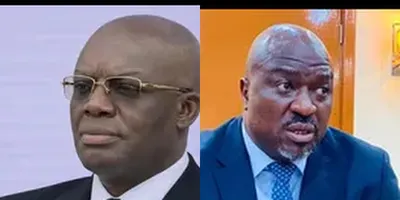
Jules Djawé, an advisor to President Faustin-Archange Touadéra, recently made a media appearance on Freedom Africa Television to defend Sani Yalo and Bida Koyagbélé. Yalo, a self-proclaimed Minister of State and special advisor, and Koyagbélé, Minister Delegate for Major Projects, were recently questioned by the justice system. Djawé’s intervention, according to the article, revealed political fractures, grudges, and ambitions within the presidential entourage. Djawé stated, "Nous, les soutiens de la première heure, ceux du mouvement associatif qui ont porté le président en 2016…" The article suggests President Touadéra was informed and did not oppose the judicial proceedings against Yalo and Koyagbélé, which some interpret as political abandonment.
Unpacking Djawé's Intervention
Jules Djawé's intervention on Freedom Africa Television involved an attempt to establish a hierarchy among President Faustin-Archange Touadéra's supporters, distinguishing between 'early supporters' and those who joined later. Djawé categorized these supporters into groups, including former political opponents like Aurélien Simplice Zingas and Chantal Jean-Édouard Koyambonou, and individuals who integrated into institutions after engaging in armed conflict, such as Arnaud Djoubaye Abazène and Hassan Bouba. Djawé stated, "Nous, les soutiens de la première heure, ceux du mouvement associatif qui ont porté le président en 2016…"
Djawé also referred to the instigator of the judicial procedure as a "rebel profile," implicitly pointing to Arnaud Djoubaye Abazène, the Minister of State for Justice. His argument suggests that the vice-presidency should be reserved for those who supported President Touadéra from the outset through political debate, rather than individuals who had previously participated in armed groups. Jules Djawé's strong defense of Sani Yalo is also attributed to a long-standing personal debt of gratitude.
Judicial Maneuvers and Ambitions
The judicial auditions of Sani Yalo and Bida Koyagbélé are interpreted by Yalo’s associates as a maneuver designed to weaken a competitor for the future vice-presidency. Jules Djawé and Sani Yalo, however, displayed what some observers considered premature triumph, labeling the judicial process a "cabale" and a "conspiracy" orchestrated by opposition "liveurs."
Djawé and Yalo’s public statements on Freedom Africa Television characterized the situation as politically motivated rather than a legitimate legal inquiry. The recording that initiated the judicial procedure was a leak of private WhatsApp exchanges between associates of former National Assembly President Karim Meckassoua. This origin contradicts the claim by Djawé and Yalo that the evidence came from a "Facebook live from the opposition," suggesting a different source for the allegations. The differing accounts of the evidence's origin highlight discrepancies in how the events are being framed by involved parties.
Broader Political Context
The ongoing judicial proceedings against Sani Yalo and Bida Koyagbélé, and the subsequent defense by Jules Djawé, intersect with broader political dynamics in Centrafrique. The discussions around a potential vice-presidency, particularly the distinction between "early supporters" and those who joined President Faustin-Archange Touadéra's camp later, show a struggle for influence within the presidential circle. Figures like Aurélien Simplice Zingas and Chantal Jean-Édouard Koyambonou, former political opponents, and Arnaud Djoubaye Abazène and Hassan Bouba, who integrated after armed conflict, represent varied factions vying for positions and recognition. This internal competition suggests a reshuffling of power and a strategic positioning ahead of future political contests. The focus on the origins of support for President Touadéra and the perceived legitimacy of various actors reflects deep-seated tensions over who holds the most sway in the country's political future.