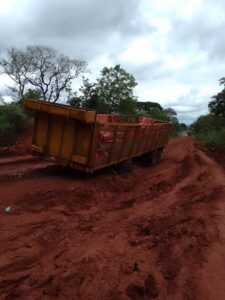
Fourteen people sustained injuries in a recent accident at the entrance of Poumbaïndji village, situated twelve kilometers from Paoua on the vital road to Bozoum, Central African Republic. The incident occurred on this key route, which connects several towns and serves as a critical artery for transport in the region. This unfortunate event has once again cast a spotlight on the deteriorating state of the country's road infrastructure and the severe consequences for its citizens.
Tragic Accident Details
The accident involved a twelve-wheeled truck, specifically registered BG25 AAJ, which overturned at the entrance of Poumbaïndji village. The vehicle was carrying both merchandise and passengers at the time of the incident, a common practice in regions where public transportation options are limited. The immediate aftermath revealed a grim scene, with fourteen people injured in the crash. Among these, five individuals were in a particularly serious condition, requiring immediate medical attention including intravenous fluid administration upon initial assessment by first responders. The severity of their injuries showed the violent nature of the rollover. Additionally, nine other victims suffered primarily from back trauma and severe leg pain, noting the widespread impact of the incident on those aboard. Following initial triage and stabilization efforts at the scene, all fourteen injured individuals were subsequently transferred to the district hospital in Paoua for further and more full medical care. Medical teams at the facility are providing continued care for the victims of the accident, working to address their various injuries and facilitate their recovery.
Government Spending Priorities
The article claims that since 2016, the Central African Republic's government has prioritized spending billions of CFA francs on regime security. This substantial financial commitment has been explicitly directed towards Russian mercenaries, specifically identifying groups like Wagner and Africa Corps. This allocation of significant resources towards security forces, particularly foreign entities, stands in stark contrast to the state of the nation's public infrastructure. Roads across the country, vital for commerce, public services, and daily life, have not undergone any significant renovation for over ten years. This long-standing neglect of essential infrastructure coincides precisely with the period during which the government has channeled substantial financial resources into security operations. The article indicates that these specific spending choices have demonstrably diverted funds away from key road maintenance and development, leading to the current widespread degradation of the road network.
Operator and Road Conditions
The recent accident near Poumbaïndji village has been attributed to a critical combination of factors: the advanced degradation of the road surface and the truck being overloaded beyond authorized limits. This incident starkly notes the immense challenges faced by operators, both commercial and private, navigating the Central African Republic's severely compromised road network. The poor condition of these roads not only increases the risk of accidents but also prolongs travel times and escalates transportation costs, impacting the national economy and the daily lives of citizens. Even the capital city, Bangui, reflects the country's profound infrastructure challenges. It is described as resembling a large village due to the total neglect of its urban infrastructure, a condition that extends beyond just roads to other public services. This widespread neglect in Bangui is consistent with the broader issue of roads across the entire country not undergoing renovation for over ten years, a period during which the government has consistently prioritized security spending over critical infrastructure development, with tragic consequences like the Poumbaïndji accident.