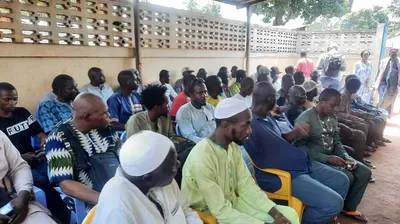
A consultation meeting recently took place at the Yapélé mosque in the Central African Republic to clarify the institutional situation of the Conseil Supérieur Islamique de Centrafrique (CSISCA) and reaffirm the legitimacy of the bureau established at the end of the previous year. This significant gathering aimed to address the internal dispute that has emerged within the organization, focusing on the recognized leadership. During the meeting, the current leadership asserted there will never be two CSISCA in the Central African Republic, showing their commitment to organizational unity and recognized authority. The event at the Yapélé mosque served as a platform to consolidate support and communicate the leadership's stance on the ongoing challenges to its legitimacy.
Meeting Details and Attendees
The consultation meeting was specifically organized by Son Éminence l’imam Abdoulaye Ouassélégué, who serves as the current president of the Islamic Council of Central Africa (CSISCA). The full attendance showed the broad support for the current leadership and the importance of the issues at hand. Officials from CSISCA's statutory bodies were present, ensuring representation from the core administrative structure of the organization. Additionally, leaders representing various affiliated associations participated, demonstrating solidarity from constituent groups. The gathering also included representatives from youth structures and women's groups, noting the inclusive nature of the consultation and the desire to involve all segments of the Muslim community. Muslim cadres attended the meeting, which focused on clarifying the institutional situation of the organization amidst an internal dispute. The broad attendance encompassed key stakeholders within the Islamic community, reflecting a concerted effort to address the ongoing legitimacy concerns regarding the current bureau and to present a united front.
Legitimacy and Official Recognition
Imam Abdoulaye Ouassélégué was elected to his position on December 30, 2025, a date that marks the formal beginning of his mandate. Following this election, the current bureau of the Conseil Supérieur Islamique de Centrafrique (CSISCA) subsequently received official approval from competent authorities. This key approval included recognition from the Ministry of Territorial Administration, Decentralization, and Local Development, formalizing the leadership's status within the national administrative framework. This governmental endorsement is a key element in establishing the bureau's legitimacy. Institutional recognition was further solidified on February 7, 2026, through an investiture ceremony held at the People's Palace in Bangui, a public event that publicly acknowledged the new leadership. The current CSISCA president emphasized that these actions align with regulatory provisions that were adopted in 2020. These provisions underpin the organizational structure and operational guidelines of CSISCA, according to the president, providing a legal and procedural foundation for the current leadership's claims. The process of election and subsequent governmental approval establishes the recognized framework for the leadership, reinforcing their position against any dissenting claims.
Challenging the Former Leadership
Provisions adopted in 2020 stipulate that any mandate holder whose term has expired loses the right to represent the institution or act in its name. The current CSISCA leadership stated that these regulations are explicit regarding the duration of mandates, leaving no ambiguity about the status of former officials. According to the religious leader, Son Éminence l’imam Abdoulaye Ouassélégué, the former leaders fall under this article, rendering them disqualified from undertaking any official action on behalf of the organization. Imam Ouassélégué affirmed that the former leadership is attempting to organize a workshop for text revision and a new general assembly, activities which the current leadership asserts are outside their authority and therefore illegitimate. The CSISCA president emphasized that the organization's statutes are clear on such matters, indicating that any actions taken by the former leadership are in direct contravention of established rules. This firm stance aims to prevent any parallel structures or activities that could undermine the authority and unity of the recognized CSISCA bureau.
Commitment to Legal Defense
The current bureau stated its determination to defend the legality of its mandate through all available legal avenues. This commitment includes pursuing its position through judicial instances, according to the CSISCA leadership, demonstrating a readiness to engage with the legal system to uphold its status. The bureau emphasized that it is prepared to utilize all necessary legal means to uphold its recognized status, leaving no doubt about its resolve. The leadership's resolve aims to reinforce its legitimacy amidst the ongoing internal dispute, ensuring that its authority is not only recognized internally but also legally protected. This legal approach is seen as a vital step in maintaining the integrity and singular representation of CSISCA in the Central African Republic.