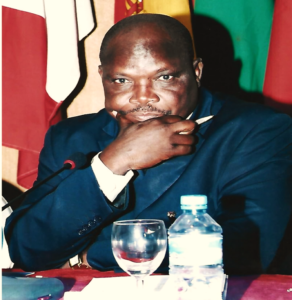
Elie Oueifio, a former minister and prefect, has detailed widespread corruption mechanisms plaguing the education system in the Central African Republic. Drawing upon his extensive experience, Oueifio describes how these mechanisms directly affect families across the nation. According to Oueifio, illicit financial transactions significantly disrupt all learning levels, directly impacting families and the fundamental integrity of the educational process. He stated that parents are often compelled to pay regular sums of money to secure school placements for their children or to guarantee passing grades. This systemic issue, he asserts, permeates the entire educational structure, from primary schools to institutions of higher learning, creating substantial barriers for many.
Widespread Financial Demands
Beyond direct payments for grades or placements, Elie Oueifio stated that families face additional compulsory financial demands within the Central African Republic's education system. These practices, according to the former minister and prefect, often involve mandatory purchases of specific school supplies. This means that families are not only paying for access but also for the materials deemed necessary by the system, often at inflated costs or through specific vendors. Local administrations also impose exceptional contributions, adding further financial strain on households already struggling with economic hardships. Oueifio noted that this widespread situation actively excludes children from the poorest backgrounds from accessing education, thereby deepening societal divides. He asserted that such demands directly undermine the fundamental principle of equal access to schooling for all children in the country, exacerbating inequalities within the system and denying opportunities to those most in need. The former minister emphasized that these illicit financial transactions are not isolated incidents but rather an entrenched aspect of the educational landscape, making it difficult for families to navigate without financial compromise.
University-Level Corruption
At the university level, exams and session validations are reportedly subject to direct commercial negotiations between some teachers and students. These practices have significantly altered the academic landscape in the capital, where intellectual pursuit is increasingly overshadowed by transactional arrangements. Former minister Elie Oueifio claims that cheating and clientelism have supplanted academic merit within university lecture halls. This shift reportedly undermines the integrity of higher education, prioritizing illicit transactions over genuine intellectual achievement and ethical academic conduct. The alleged prevalence of such activities suggests a systemic issue where financial exchanges dictate academic outcomes, from passing courses to obtaining degrees. This situation impacts the credibility of qualifications obtained from these institutions and further exacerbates inequalities, potentially disadvantaging students who cannot engage in such negotiations, regardless of their academic prowess. The erosion of merit-based evaluation, Oueifio suggests, has profound long-term consequences for the quality of graduates and the nation's intellectual capital.
Official Inaction and Unheeded Complaints
Complaints from parent associations regarding educational malpractices in the Central African Republic routinely go unheeded by the Ministry of National Education's control services, according to former minister Elie Oueifio. He stated that these grievances, detailing daily abuses observed on the ground, are consistently ignored, perpetuating a climate of impunity where corrupt practices can flourish without consequence. Official reports, Oueifio claimed, frequently omit any mention of these widespread issues, effectively whitewashing the reality of the situation and preventing meaningful intervention. This alleged inaction by authorities permits ongoing corruption to flourish within the education system, directly impacting students and families who are left with no recourse. The former minister's assertions suggest a systemic failure to address documented problems, further entrenching illicit practices across various educational levels. The lack of official response to parent concerns notes a significant disconnect between the reported realities and the government's acknowledged understanding of the situation, fostering a deep sense of disillusionment among the affected communities.