The government of the Central African Republic has adopted a bill to ratify the optional protocol to the International Covenant on Civil and Political Rights. Officials intend for this move to secure the definitive abolition of the death penalty within the country. This legislative action follows the state's prior decision to remove capital punishment from its national law in May 2022. By formalizing this commitment through an international framework, the administration seeks to align its legal standards with global human rights protocols. The ratification process represents a further step in the nation's efforts to codify the prohibition of state-sanctioned executions. The Central African Republic government adopted a bill to ratify the optional protocol to the International Covenant on Civil and Political Rights, aiming for the definitive abolition of the death penalty. The Central African Republic previously abolished the death penalty in its national law in May 2022.
International Standards for Abolition
The United Nations General Assembly originally adopted the Second Optional Protocol to the International Covenant on Civil and Political Rights, aiming at the abolition of the death penalty, in 1989. This international treaty requires states to take all necessary measures to abolish the death penalty within their jurisdiction. Countries that ratify the protocol commit to ensuring that no one within their territory is executed. The UN protocol for the abolition of the death penalty was originally adopted by the United Nations in 1989. By signing onto this specific international instrument, the state formally pledges to uphold the principles set forth by the United Nations regarding the protection of the right to life. This commitment is intended to prevent any future reinstatement of capital punishment as a legal penalty for criminal offenses.
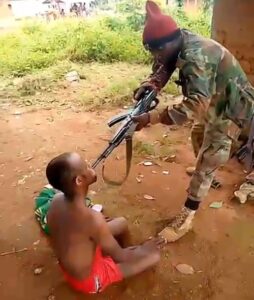
Concerns regarding human rights persist alongside the government’s efforts to align with international standards. Reports indicate that extrajudicial executions, including beheadings and the killing of a village chief, are being committed by Russian mercenaries in the provinces. These allegations specifically point to the involvement of members of the Wagner Group, who operate within the country. The persistence of these activities creates a complex environment for the implementation of national and international legal protections.
Documented incidents of violence remain a point of contention for local communities. Two young recruits were reportedly killed in Bouca without any public judicial procedure. These deaths occurred outside the framework of the national legal system, raising questions about the enforcement of human rights protocols in areas where state authority remains challenged. The discrepancy between the ratification of international treaties and the occurrence of such violence on the ground continues to draw attention from rights monitors. Despite the legal advancements made through the adoption of the bill, the practical application of these standards faces significant obstacles in provinces where the presence of the Wagner Group is noted. The government’s move to ratify the protocol is viewed as a formal statement of intent, yet the local reality involving extrajudicial actions presents a stark contrast to the protections guaranteed by the International Covenant on Civil and Political Rights.