The Council of Ministers of the Central African Republic requested a reinforcement of efforts against the fraudulent importation of whisky in sachets on August 20, 2026. This directive comes as the government emphasizes health risks and the protection of young people as its primary justifications for combating the widespread availability of sachet whisky. The move signals an intensified focus on regulating alcoholic beverages sold in small, affordable plastic pouches, which officials have frequently linked to public health concerns. The Central African Republic has previously implemented measures to control the sale of these products, but their prevalence, particularly of locally produced versions known as 'wanawa', remains a persistent challenge across the nation.
Government's Renewed Push
The government of the Central African Republic cites health and public order risks associated with the consumption of these drinks as primary concerns, particularly among young people. These concerns underpin the renewed push against the product. Whisky in sachets has been officially banned for several years in the Central African Republic, yet its availability persists, especially in the form of locally produced 'wanawa'. The official ban on these products shows the government's long-standing recognition of their negative impact on public health and societal well-being.
To address the continued circulation of these banned products, the government has outlined several proposed measures. These include strengthening customs controls at border points to prevent illegal imports. By tightening these controls, authorities aim to stem the flow of illicit sachet whisky into the country. Additionally, market inspections will be intensified across the country to identify and seize sachet whisky from vendors. This proactive approach seeks to disrupt the distribution networks that allow these products to reach consumers. Authorities also plan to sanction fraudulent agents found to be involved in the trade or distribution of these illicit beverages, aiming to deter complicity in the illegal trade. The government intends to intensify public awareness campaigns, aiming to educate the population about the dangers of sachet whisky and deter its consumption, thereby fostering a more informed public.
The Widespread 'Wanawa' Product
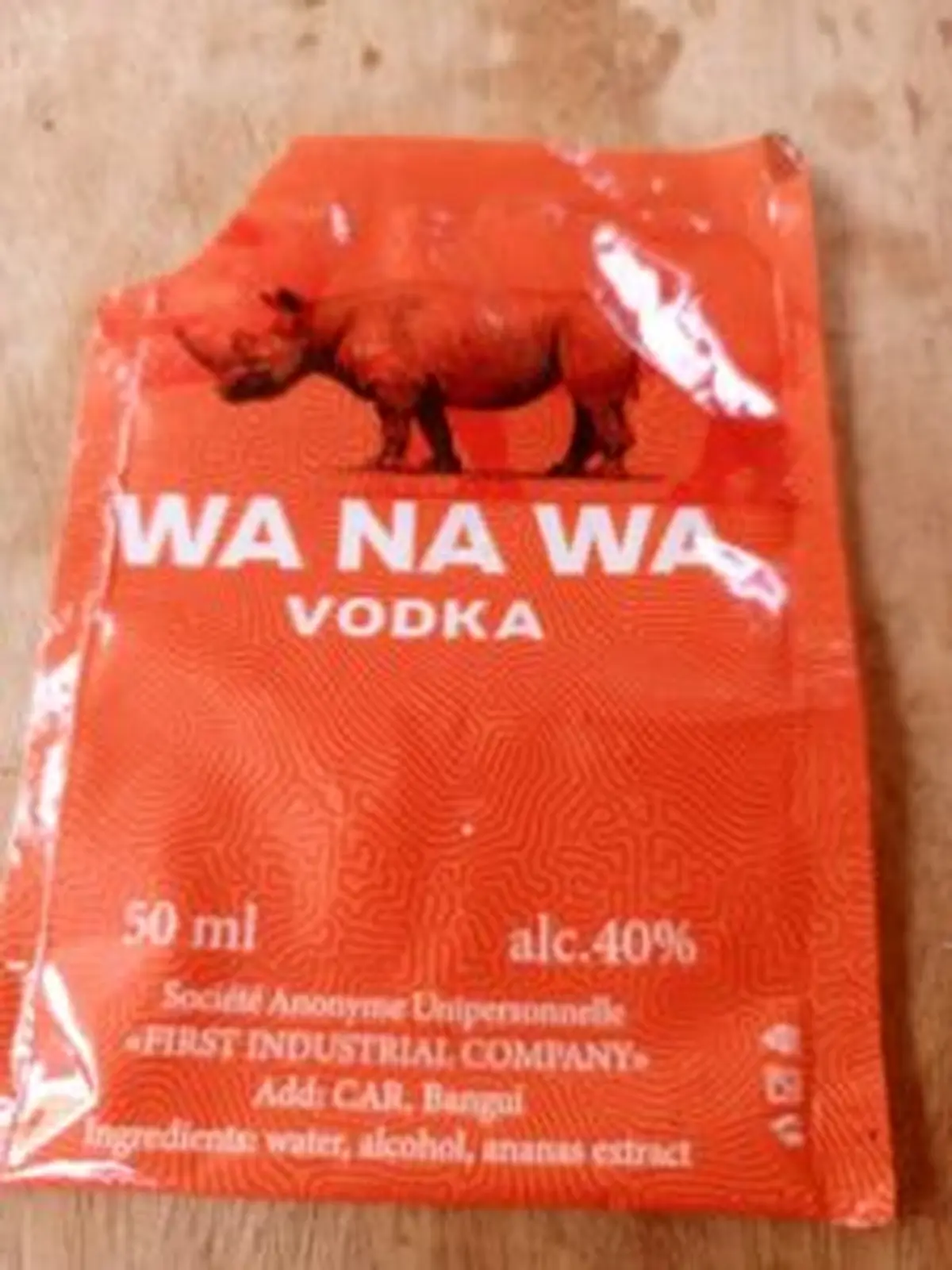
"Wanawa," an alcoholic drink produced by Wagner and packaged in sachets, is widely commercialized throughout the Central African Republic. Its availability has expanded significantly, reaching numerous towns and rural areas, including villages, markets, and mining zones. The product is notably accessible in the Vakaga region, around Birao, and in other remote localities, indicating a broad and deep penetration into the country's social fabric. The widespread commercialization of Wanawa has made it a ubiquitous presence in daily life for many Central Africans.
The sachets of Wanawa are sold at low prices, which facilitates consumption by young people in various settings, including neighborhoods, villages, and mining sites. This affordability contributes to its widespread appeal, particularly among vulnerable populations. Observers note that the presence of Wanawa has grown in parallel with Wagner's deployment across different regions of the country. This product is frequently found in remote villages and mining sites, often following areas where Wagner-linked groups operate, suggesting a correlation between their activities and the product's distribution. The government's announced measures to combat sachet whisky do not specify actions against the local production of alcoholic beverages in sachets, leaving a significant gap in the regulatory framework.
Regulatory Questions and Concerns
A paradox emerges as the government intensifies its efforts against imported whisky in sachets, while Wanawa, produced by Wagner and also sold in sachets, continues to circulate freely across the Central African Republic. This situation prompts questions about whether the same regulatory rigor will be applied uniformly to all similar products available on the country's market. This disparity in enforcement raises concerns among observers. Questions are raised regarding state control over Wanawa's composition, the implementation of sanitary checks, its production authorization, and its sales within the Central African Republic. The lack of clarity surrounding these aspects of Wanawa's production and distribution further complicates the regulatory landscape. The government's current directives have not explicitly addressed the local production of sachet-packaged alcoholic beverages, noting a potential oversight in its full strategy to mitigate public health risks associated with these products. This selective enforcement has led to significant scrutiny, as the article notes the critical need for consistent application of health and safety standards across all alcoholic beverages sold in sachets, regardless of their origin or producer.