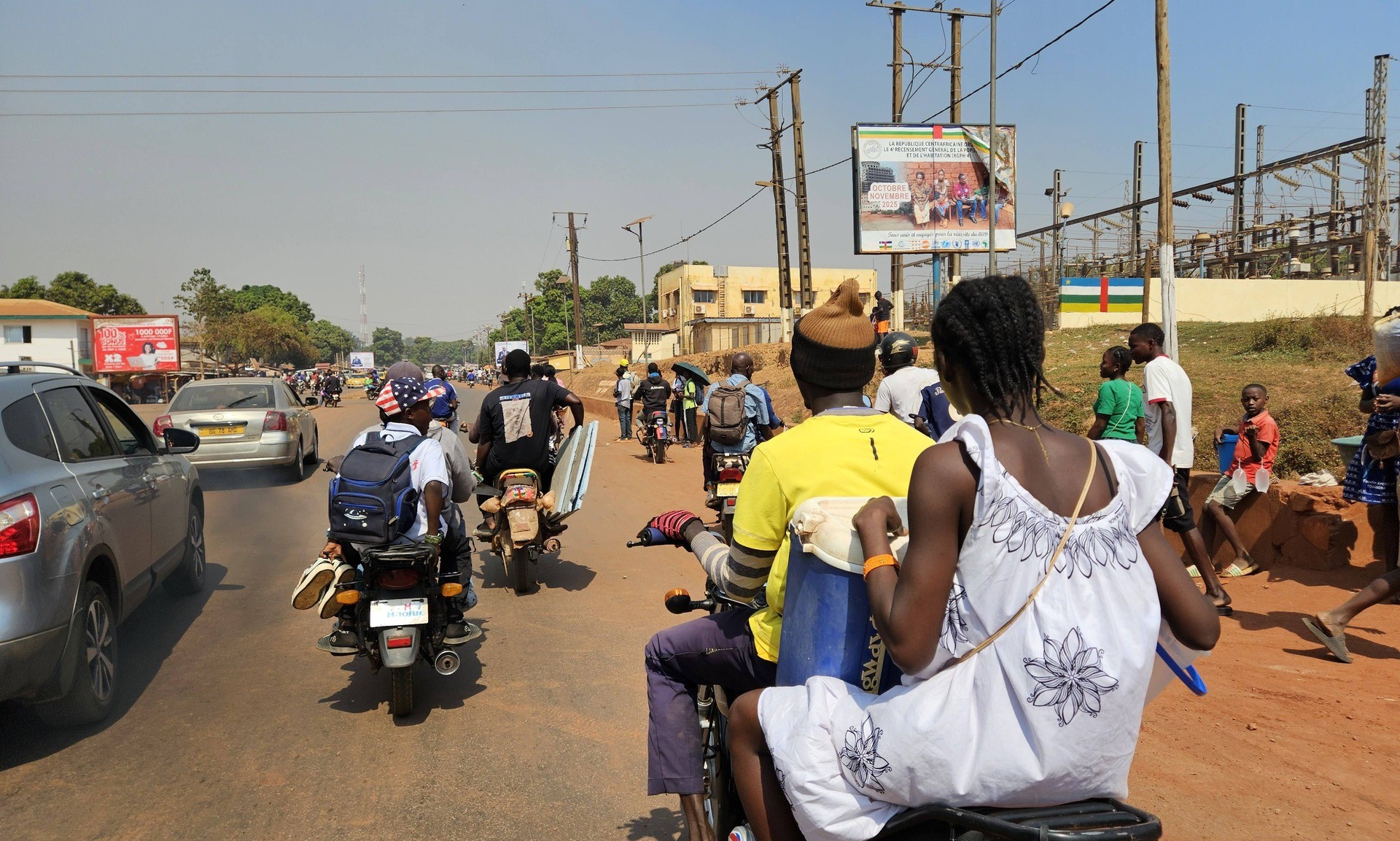
The Ministry of Transport in the Central African Republic has implemented a new regulation restricting the number of passengers permitted on motorcycle taxis to two. Authorities issued this directive to address traffic safety concerns, mandating that operators strictly adhere to the updated capacity limit.
Motorcycle taxi drivers have responded to the policy by staging protests in various locations. Participants in these demonstrations have expressed their opposition to the mandate by tearing down official posters that prohibit overloading.
The implementation of this directive marks a significant shift in the operational standards for motorcycle taxis across the Central African Republic. By limiting the number of passengers to two, the Ministry of Transport aims to standardize the transport practices of these vehicles, which are frequently used for commuting in urban areas. The Ministry of Transport has emphasized that the primary objective of this regulatory change is to improve road safety and reduce the frequency of traffic accidents involving motorcycle taxis, which are often cited as a common mode of transport for the general public.
In response to the announcement, the reaction from the transport sector has been immediate and vocal. Motorcycle taxi drivers, who rely on these vehicles for their daily livelihoods, have voiced concerns regarding the potential economic impact of the capacity limit. These drivers argue that the restriction on passenger numbers will affect their daily income, as they are often accustomed to carrying more than two individuals to maximize their earnings per trip.
The protests, which have manifested in various locations, highlight the tension between the government’s safety objectives and the operational realities faced by the drivers. In several instances, the demonstrations have escalated beyond verbal opposition. Some motorcycle taxi drivers have protested the new regulation by tearing down official posters that prohibit overloading. These posters, which were strategically placed by the Ministry of Transport to inform the public and the drivers of the new rules, have been targeted as a symbol of the government’s enforcement efforts. By removing these materials, the protesters are signaling their refusal to comply with the new mandate and their rejection of the government’s oversight regarding passenger capacity.
The Ministry of Transport has not yet released a formal statement regarding the destruction of these official notices, but the situation remains a point of contention within the transport industry. Local authorities are monitoring the situation as the dialogue between the Ministry of Transport and the motorcycle taxi operators continues. The government maintains that the regulation is essential for the safety of all road users, while the drivers continue to advocate for their ability to operate under previous conditions. As the situation evolves, both the Ministry of Transport and the drivers are navigating the implications of these new safety standards on the daily transit landscape of the Central African Republic. The ongoing protests serve as a clear indicator of the challenges involved in enforcing traffic regulations in a sector that is vital to the mobility of the population.