A resident of Bangui fell into an open construction pit on Avenue David Dacko at approximately 7 PM, noting a local safety concern that required immediate medical attention. The individual was subsequently transferred to the Hôpital communautaire for treatment following the incident. This startling event shows the immediate and critical need for accessible, well-equipped, and functioning healthcare services in the Centrafrican capital, where systemic deficiencies continue to impede timely and effective patient care. The incident serves as a stark illustration of the challenges faced by both patients and medical facilities in the Central African Republic.
Patient's Difficult Journey
The man's ordeal began when he used accumulated waste to climb out of the pit where he fell, a testament to his immediate need for escape and the lack of immediate assistance. He was initially taken to the MSF clinic of Bonga-Bonga for immediate attention, a common first point of contact for many residents due to the broader healthcare landscape. However, the patient's journey for care was far from over. After arriving at the Hôpital communautaire, the patient endured a two-hour wait before staff determined the facility lacked the necessary means to treat his injury. This extended delay at a major public hospital notes the operational challenges and resource constraints prevalent within the system. Following this assessment, which revealed the Hôpital communautaire's inability to provide essential diagnostic services, the patient was then sent to the Hôpital de l'Amitié specifically for an X-ray. This transfer between facilities for a basic diagnostic procedure exemplifies the fragmented nature of healthcare provision in Bangui.
The patient’s experience is not isolated. Patients at the Hôpital communautaire frequently experience extended waiting periods, often for hours, before they receive treatment. This systemic issue contributes to patient frustration and can exacerbate medical conditions, particularly in emergency situations. The lack of immediate diagnostic capabilities at primary facilities necessitates these time-consuming transfers, further burdening patients and their companions.
With the X-ray results in hand from the Hôpital de l'Amitié, the patient returned to the Hôpital communautaire. There, a doctor examined him, prescribed medication, and instructed him to return in a week. This multi-stage process, involving multiple facilities and significant delays, shows the inefficiencies in the current healthcare system. A week later, an operation was considered at the Hôpital communautaire but was ultimately deemed unnecessary, and a cast was applied to his injury. The patient's lengthy and complicated path to receiving treatment for a relatively common injury like a fall into a pit vividly illustrates the profound difficulties in accessing even basic medical care in the Central African Republic.
Systemic Equipment Shortages
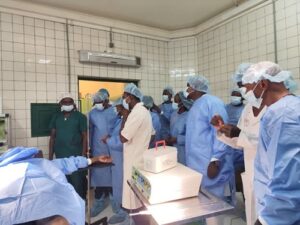
The Hôpital communautaire, a main healthcare facility in the capital, currently operates without basic diagnostic equipment. The facility does not possess a radiology service, meaning it lacks a radiology machine essential for diagnosing injuries such as fractures. This critical absence forces patients requiring such services to seek care elsewhere, often delaying treatment and complicating their medical journey. Public health structures across the Central African Republic continue to function with these systemic equipment shortages, impacting patient care at every level. The absence of critical diagnostic tools at major hospitals like the Hôpital communautaire notes a broader struggle within the nation’s healthcare infrastructure, which is grappling with insufficient investment and resources.
This situation frequently results in patients being transferred between facilities for fundamental examinations, adding to their medical journey and potentially exacerbating their conditions due to lost time and increased stress. The reliance on external facilities for basic services shows the urgent need for investment in medical equipment for key healthcare providers. Without these fundamental tools, hospitals are severely limited in their capacity to provide full care. The lack of a radiology machine at a primary facility like the Hôpital communautaire is particularly concerning, as it directly impacts the ability to diagnose and treat common traumas and injuries effectively. This deficiency not only prolongs patient suffering but also places additional strain on the limited resources of other, better-equipped facilities that must absorb the overflow. Public health structures continue to operate without basic equipment, a challenge that permeates the entire system and severely curtails the quality and accessibility of care for the population.
MSF as Primary Support
Médecins Sans Frontières (MSF) has emerged as the primary recourse for a large part of Bangui's population seeking medical attention. Consequently, many patients are redirected to the MSF clinic, which is frequently overwhelmed by the demand. This often leads to critical situations for patients needing immediate care, as the capacity of MSF facilities is not limitless. For instance, after the Hôpital communautaire determined it lacked the necessary means to treat the patient mentioned earlier, his companions were informed by the MSF clinic that the structure was saturated and had no available beds. This incident notes the immense pressure on MSF facilities, as they bear the brunt of the capital's healthcare needs due to the shortcomings of the public system.
The reliance on MSF suggests a broader failure in the public health system to provide adequate and accessible care to its citizens. While MSF plays a key role in filling these gaps, its resources are finite, and its clinics are not designed to be the sole providers of full healthcare for an entire capital city. The fact that patients are often redirected to MSF, only to find those facilities also at capacity, paints a dire picture of the healthcare landscape in Bangui. In many cases, patients are redirected to the MSF clinic, which is already overwhelmed, indicating a systemic pressure point that needs urgent attention. This over-reliance on humanitarian organizations for basic services points to a significant crisis in the Central African Republic's public health infrastructure, demanding immediate and sustained investment to prevent further deterioration and ensure the well-being of its population.