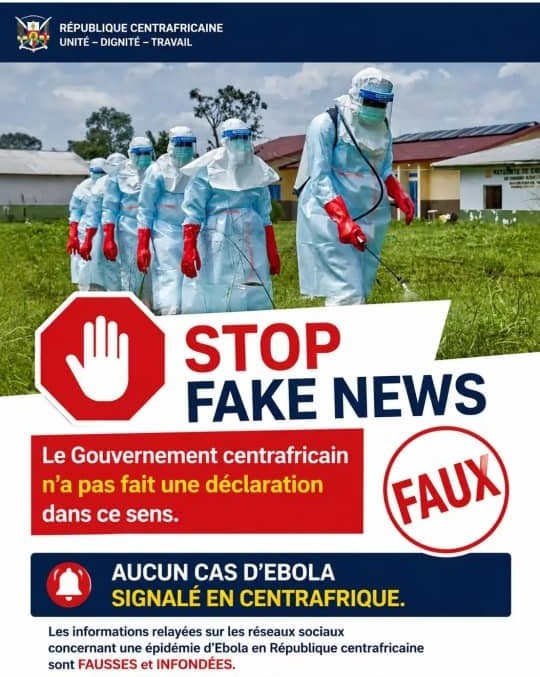
The Central African Republic has denied rumors of an Ebola-type hemorrhagic fever epidemic circulating within the country. Since May 25, messages widely shared on the WhatsApp platform have claimed such an outbreak is occurring, creating widespread concern among the populace. Authorities clarified that no Ebola cases have been officially registered to date in the Central African Republic, firmly refuting the claims of an ongoing epidemic. These messages, which have proliferated across various social media channels, have been identified as misinformation by official health bodies.
Official Denials and Verification
Verification with health authorities has determined that information regarding an Ebola epidemic in the country is false. Messages circulating on WhatsApp claiming an epidemic in the Central African Republic are misinformation, according to official sources. These publications, widely shared, have mentioned hundreds of cases and deaths, specifically speaking of more than 500 infected people and at least 131 dead, claims which have been officially debunked. The Ministry of Health addressed these rumors directly on May 23, taking proactive steps to counter the false narrative.
On that date, the Ministry of Health published a denial on its official Facebook page. This public statement was issued in response to widespread speculation on social media platforms about a supposed Ebola epidemic within the Central African Republic. The denial aimed to counter the false information and reassure the public regarding the country's health situation, providing accurate and verified details. This official communication showed that the claims of an epidemic were unfounded and that the public should rely on credible sources for health information. The government continues to monitor public health and provide accurate information to prevent the spread of unverified claims, emphasizing transparency and public safety.
Context of Neighboring Outbreak
The Ministry of Health in the Central African Republic is intensifying its communication efforts to prevent the potential introduction of the virus from neighboring countries. This heightened vigilance specifically targets the Democratic Republic of Congo (DRC), where an Ebola epidemic resurfaced in the eastern region nearly a month ago. The Ministry is amplifying these communications to ensure that all citizens are aware of the risks and preventative measures, particularly given the regional context. The Central African Republic shares a long and porous border with the DRC, making cross-border health surveillance a critical component of its public health strategy. Authorities are focusing on informing communities, particularly those in border areas, about prevention measures and the risks associated with the ongoing outbreak in the DRC. This proactive approach aims to safeguard the Central African Republic from importing cases of the disease, following the recent resurgence observed in its eastern neighbor, and to prepare for any potential health challenges. This strategic communication is vital in managing public perception and ensuring preparedness.
Border Control and Monitoring
Checks with health structures, particularly in border areas with the Democratic Republic of Congo, have revealed no Ebola cases registered to date. In Bayanga, Sangha-Mbaéré, a border zone with the Republic of Congo, health authorities similarly indicate that no Ebola cases have been reported, further corroborating the absence of the disease within the country. The Ministry of Health has reinforced control measures, particularly in river border areas shared with both the Democratic Republic of Congo and the Republic of Congo. These heightened measures are in place across Haut-Mbomou and Lobaye prefectures, as well as within the capital city of Bangui, demonstrating a full approach to border security and public health.
Travelers arriving from areas deemed to be at-risk are subject to systematic health monitoring upon entry. This protocol aims to identify and manage potential cases promptly, minimizing any risk of transmission. Authorities state that anyone presenting suspicious symptoms consistent with Ebola can be placed under observation for 21 days as a precautionary measure, allowing for thorough assessment and isolation if necessary. These actions are part of the broader strategy to prevent the introduction and spread of the virus within the Central African Republic, ensuring strong epidemiological surveillance at all points of entry.
Local Health Official Statements
Messages circulating on social media platforms claimed widespread cases and fatalities, stating more than 500 people were infected and at least 131 had died. Despite these alarming claims, the Ministry of Health has officially declared that there is no Ebola in the Central African Republic. Officials maintain that the information disseminated online is false and is contributing to unnecessary panic. This official position is consistently communicated across all levels of government and health administration.
Local health authorities have also corroborated the government's position. In Mongoumba, within the Lobaye prefecture, health officials confirmed the non-existence of an Ebola epidemic in their area, directly addressing local concerns. These local statements align with the national denial, reinforcing the government's stance against the circulating rumors and providing reassurance to communities. The Ministry of Health continues to urge the public to rely on official sources for health information, such as its official Facebook page and public health bulletins, to ensure they receive accurate and timely updates regarding the country's health situation. This unified message from both national and local health authorities aims to effectively combat the spread of misinformation and maintain public trust.