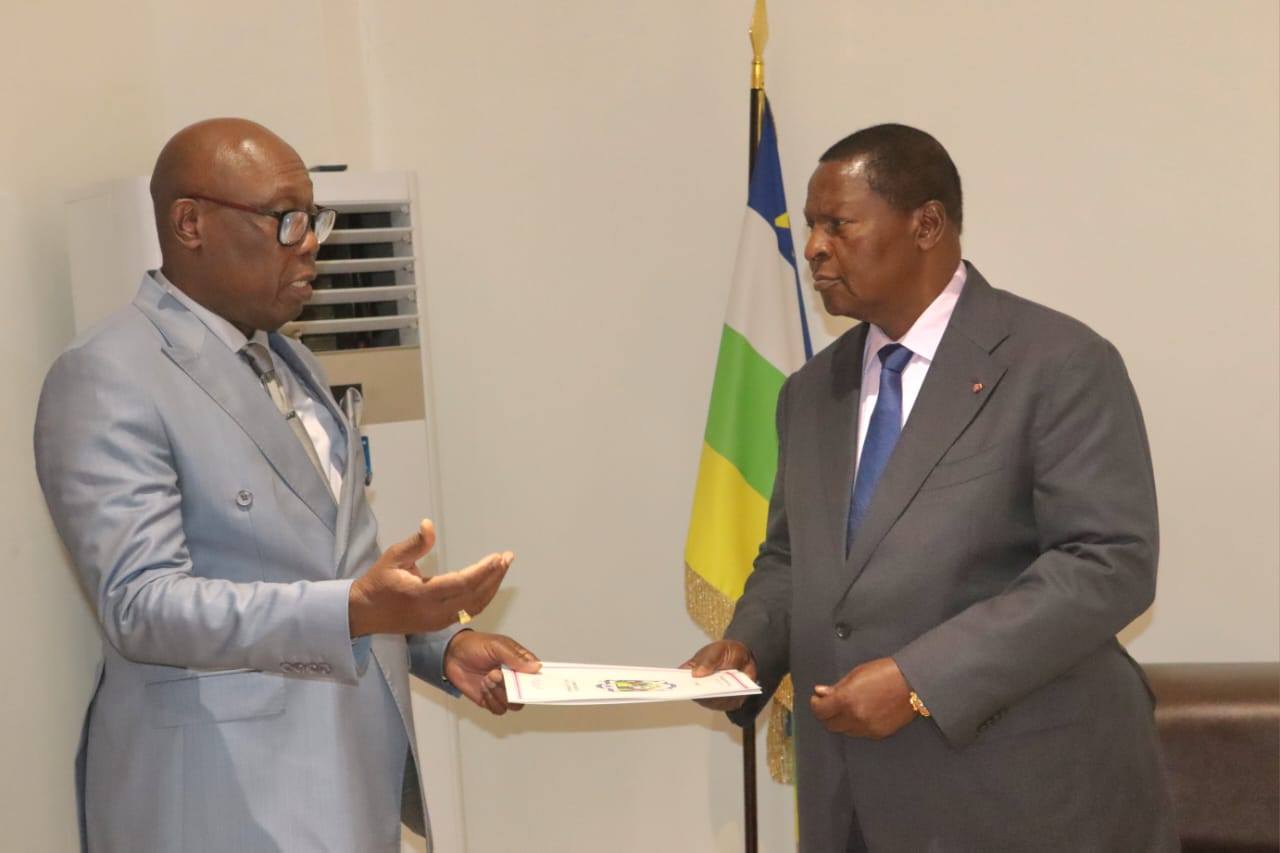
The Central African Republic has officially appointed a new 32-minister government under reappointed Prime Minister Félix Moloua, following President Faustin-Archange Touadéra's acceptance of Moloua's resignation on May 13. The newly formed executive body, comprising 32 ministers, introduces ten new individuals to key positions, signaling both change and continuity within the nation's leadership. Among the significant appointments, Évariste Ngamana has been named Minister of State and government spokesperson, additionally taking on the key Communication portfolio. This particular appointment contributes to an increase in the number of Ministers of State, bringing the total to four within the new administration. The composition of the new governmental team also notes a gender disparity, as only five women are included in the executive. This structure shows the ongoing challenges in achieving gender balance in high-level political appointments within the Central African Republic.
Key Ministerial Appointments
Several critical ministerial positions have seen new leadership or a return of experienced figures. Henri Wanzet Linguissara has notably returned to the ministry responsible for Disarmament and monitoring political agreements, a portfolio central to peace and stability efforts in the country. This reappointment emphasizes the government's continued focus on security and reconciliation. Marc Mandaba is appointed to the Ministry of Economy, Planning, and International Cooperation, a role vital for steering the nation's economic development and fostering international partnerships.
In a move to address the nation's energy needs, Opportune Edwige Pouninguiza will take charge of the Energy and Hydraulics portfolio, a sector key for infrastructure development and public services. Security reforms are also evident, with Bienvenu Zokoue, formerly the Director General of the police, now heading the Ministry of Interior and Public Security. This transition from a high-ranking police role to a ministerial position suggests a strategic emphasis on law enforcement and internal security.
The agricultural sector, a cornerstone of the Central African Republic's economy, sees Emmanuel Mbetide Bessane appointed to the Ministry of Agriculture and Rural Development. This appointment is expected to drive initiatives aimed at enhancing food security and rural livelihoods. Sylla Simbala is entrusted with the Ministry of Environment and Sustainable Development, reflecting a commitment to environmental protection and sustainable resource management in the face of global climate challenges. Roger Andjalandji receives the appointment to the Ministry of Digital Economy, Posts, and Telecommunications, signaling the government's intent to advance digital infrastructure and connectivity. Finally, Amadou Bi-Aliou is appointed to the Department of Livestock and Animal Health, a vital area for the country's agrarian economy and public health.
Beyond new appointments, several ministers have been reassigned to new portfolios, indicating a strategic reshuffling of responsibilities. Arthur Bertrand Piri, who previously served as Minister of Energy, is now Minister of State for Public Works, a move that places him in charge of critical infrastructure projects. Maxime Balalou transitions from the Communication ministry to Commerce, suggesting a shift in focus towards economic affairs. Hassan Bouba moves from the Ministry of Livestock to Urbanism, indicating a new role in urban planning and development. These reassignments aim to leverage ministerial experience in new areas of governance.
Continuity and Structural Changes
Continuity marks several key positions within the new Central African Republic government, ensuring stability in critical sectors. Sylvie Baïpo-Temon retains her important portfolio as Minister of Foreign Affairs, maintaining consistency and experience in the nation's diplomatic representation and international relations. Arnaud Djoubaye Abazène continues in his role as Minister of State for Justice, overseeing legal and judicial matters, which are fundamental to the rule of law. Claude Rameaux Biro remains Minister of Defense, ensuring stability and continued leadership in the security sector. Herbert Gontran Djono Ahaba also keeps his position as Minister of Transport, a role vital for national connectivity and logistics. Rufin Benam Beltoungou stays on as Minister of Mines, a key economic sector for the country, and Heritier Doneng continues to serve as Minister of Sports, supporting national athletic development.
Notably, the Ministry of Tourism is not included in the structure of the newly appointed government, indicating a potential restructuring of governmental priorities or a consolidation of its functions under another department. This structural change reflects the administration's strategic decisions regarding resource allocation and focus areas.
Government Formation Context
The formation of the new government in the Central African Republic follows the re-appointment of Félix Moloua as Prime Minister by President Faustin-Archange Touadéra. President Touadéra had initially accepted Mr. Moloua's resignation on May 13, a procedural step that paved the way for the formation of a new cabinet, before re-tasking him with the responsibility of forming a new executive team. The formation process has resulted in a 32-minister government, which includes ten new individuals bringing fresh perspectives to the administration. Among these, Évariste Ngamana has been appointed Minister of State and government spokesperson, also taking on the key Communication portfolio, a role that will define the government's public messaging. This appointment brings the total number of Ministers of State to four within the executive body, signaling an expansion in this senior ministerial category. The new governmental team features only five women, noting the ongoing challenge of achieving gender parity in high-level government positions. The careful balance of new faces and experienced hands, along with strategic reassignments, suggests an effort to address the nation's pressing challenges while maintaining stability in governance.