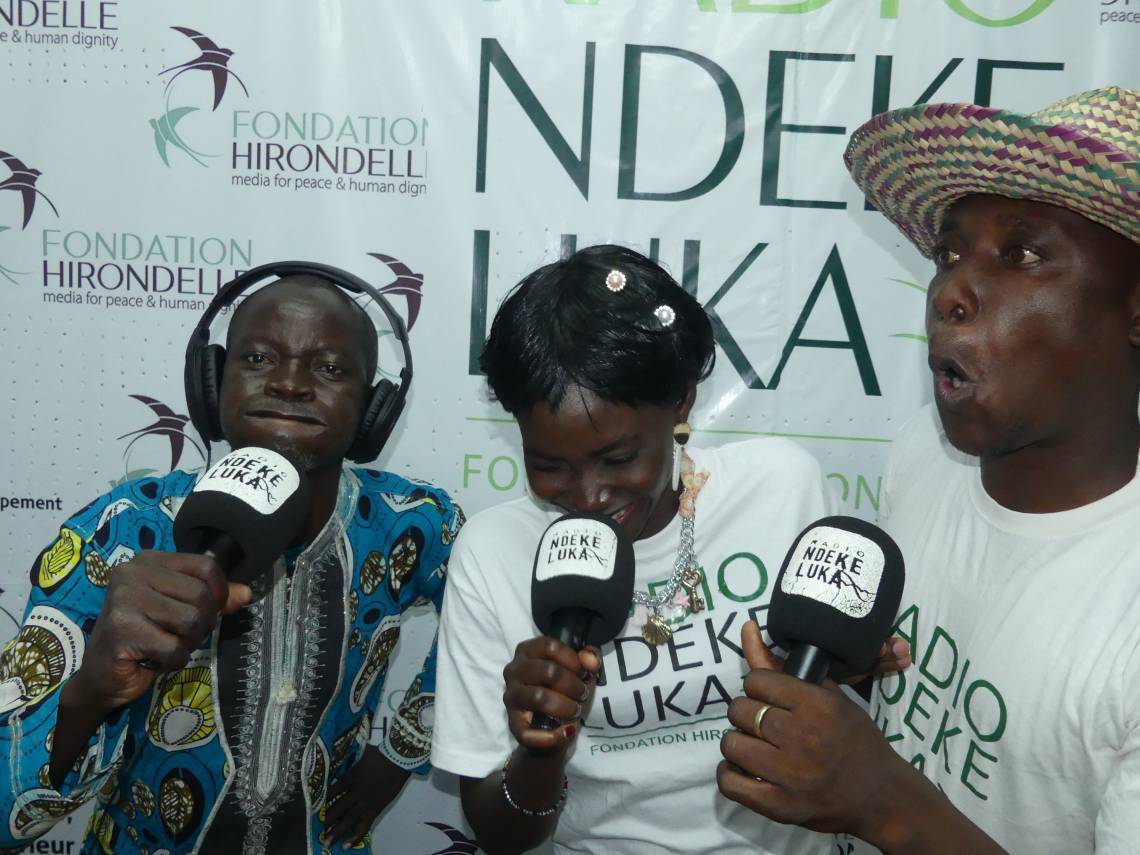
The framework of Central African nationality law is the central theme of this week's Mag-Justice program, broadcast by Radio Ndeke Luka. The program, which explores legal topics relevant to the République centrafricaine, aired on May 17, 2026. Radio Ndeke Luka is supported by the Journalism Trust Initiative, Fondation Hirondelle, the Direction du développement et de la coopération DDC, and the Union Européenne, broadcasting from Bangui.
Program Details and Availability
Audio versions of the program are available for listeners in both French and Sango. The dual-language offering aims to ensure accessibility for a wider audience across the République centrafricaine, where both languages are widely spoken. This approach by Radio Ndeke Luka, which broadcasts from Bangui, facilitates engagement with the legal discussions presented in the Mag-Justice program. The program's topic, focusing on the Central African nationality law framework, is a subject of significant importance to the local population. Providing content in both national languages shows the commitment of the broadcasters and supporting organizations, including the Journalism Trust Initiative, Fondation Hirondelle, the Direction du développement et de la coopération DDC, and the Union Européenne, to full public service journalism.
Understanding Nationality Acquisition
Acquisition of nationality in the République centrafricaine is governed by specific legal provisions, a topic frequently explored in public discourse. The legal framework outlines various pathways through which individuals can attain citizenship, encompassing principles such as birthright, descent, and naturalization. These mechanisms are central to defining the legal identity of residents within the Centrafrique. Discussions surrounding these laws often consider both historical context and contemporary challenges, particularly concerning documentation and administrative processes. Radio Ndeke Luka, broadcasting from Bangui, regularly contributes to public understanding of such legal matters. Organizations like the Journalism Trust Initiative, Fondation Hirondelle, the Direction du développement et de la coopération DDC, and the Union Européenne support initiatives that aim to clarify these complex legal concepts for the general public, ensuring accessibility to information regarding rights and responsibilities tied to nationality. The framework dictates conditions for individuals born within the country's borders, those born to Central African parents abroad, and foreign nationals seeking to become citizens. Understanding these pathways is essential for both citizens and residents of the République centrafricaine.
Retention and Loss of Citizenship
The Central African nationality law framework also details the conditions under which citizenship can be retained or, conversely, forfeited. Legal provisions address automatic retention for individuals born with Central African nationality, as well as specific circumstances that might lead to its loss, such as voluntary acquisition of a foreign nationality or certain acts deemed contrary to national interests. These regulations are designed to maintain clarity regarding the legal status of citizens within the République centrafricaine. The framework outlines processes for renunciation and deprivation of nationality, ensuring a defined legal pathway. Radio Ndeke Luka, broadcasting from Bangui, frequently discusses these aspects to inform the public about their rights and obligations concerning national identity. Organizations like the Journalism Trust Initiative, Fondation Hirondelle, the Direction du développement et de la coopération DDC, and the Union Européenne support efforts to clarify these complex legal concepts for the general public, fostering a better understanding of the legal landscape in Centrafrique.