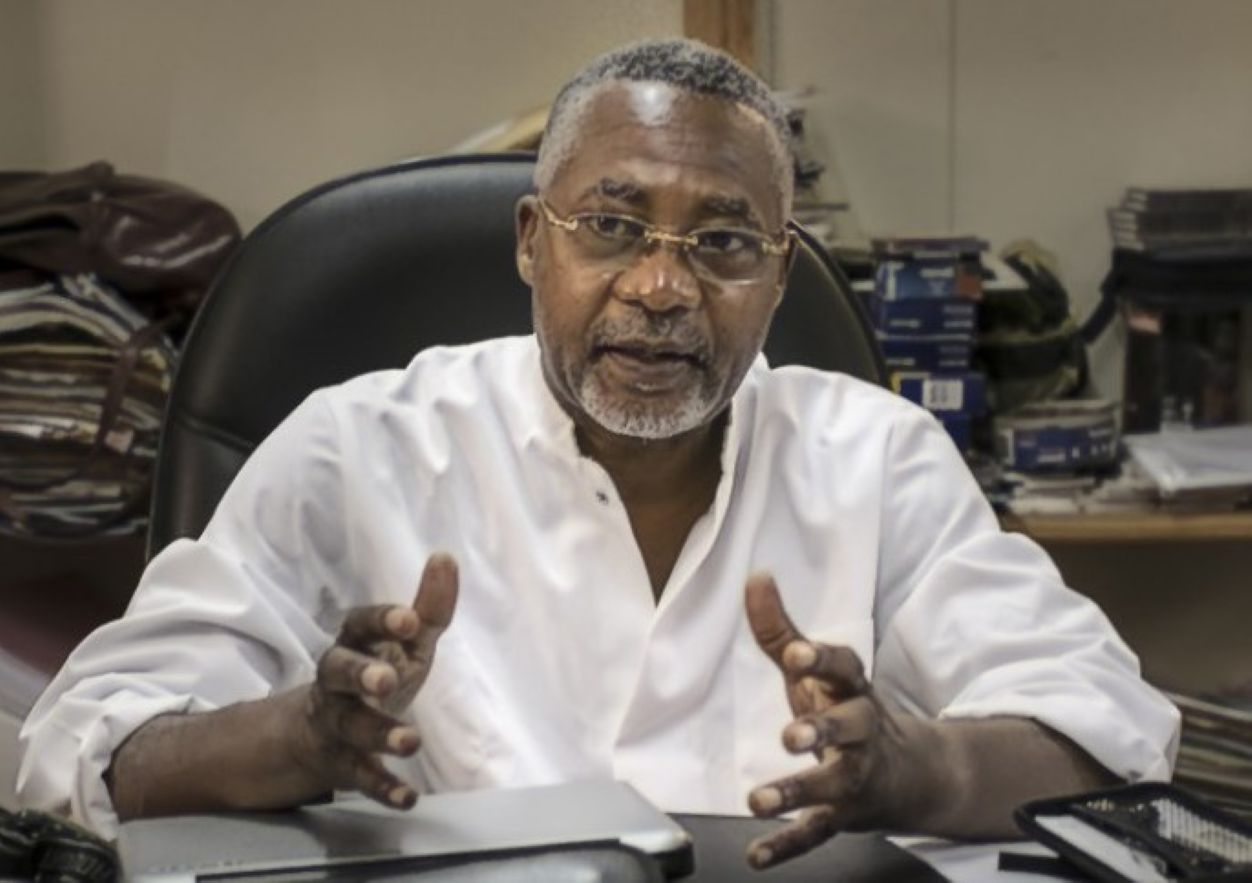
Mouammar Bengué-Bossin, president of the Front populaire Zo Kwè Zo, has criticized the Central African Republic's political structure, stating that the presidential system stifles national development. Bengué-Bossin argues that all strategic decisions, including public finance management, market attribution, and high-level appointments, are subject solely to the head of state's will. This extreme concentration of prerogatives in one person's hands, he asserts, fosters corruption, impunity, and nepotism within the Central African Republic. "Ce régime présidentiel hyper-concentré étouffe littéralement le développement du pays en confisquant tous les pouvoirs décisionnels," Bengué-Bossin said, asserting that this concentration of power impedes progress. He maintains that this centralization undermines accountability and allows for practices detrimental to public trust and national development.
Authoritarian Power Monopolization
Mouammar Bengué-Bossin denounces what he describes as authoritarian drifts and the centralization of institutions in Bangui. He notes the consequences of power monopolization by a small group of leaders, arguing that this situation has profound negative impacts on the nation. Bengué-Bossin asserts that this concentration of power impedes the nation's development and hinders effective governance. He states that the absence of real counter-powers and the paralysis of public administration stem directly from the personalization of power within the Central African Republic. According to Bengué-Bossin, this dynamic prevents effective governance and broader participation in decision-making processes, ultimately hindering national progress and the fair distribution of resources. The critic emphasizes that such a system cultivates an environment where accountability is diminished, leading to a lack of transparency in public affairs.
Stifled Progress and Innovation
Mouammar Bengué-Bossin states that the current political architecture is the main obstacle to social progress, good governance, and economic emergence in the nation. He further elaborates that this political architecture serves as the primary impediment to achieving these vital national objectives. He argues that the system actively hinders local initiative and marginalizes various regions within the country, preventing them from contributing fully to national development. According to Bengué-Bossin, this structure also neutralizes democratic institutions that are intended to ensure control and transparency in governance, thereby weakening the checks and balances essential for a healthy democracy. He contends that by stifling parliamentary debate and refusing to share responsibilities, the regime prevents the emergence of innovative solutions tailored to local realities. Bengué-Bossin maintains that this approach ultimately undermines the country's capacity for development and broader public participation, leading to stagnation rather than advancement. The lack of diverse perspectives in decision-making, he suggests, limits the country's ability to adapt and grow.
Proposed Institutional Reforms
To overcome what he describes as political suffocation in the Central African Republic, Mouammar Bengué-Bossin advocates for a profound revision of institutions. The president of the Front populaire Zo Kwè Zo calls for a transition to a balanced parliamentary system, which he believes would distribute power more equitably and foster greater accountability. He also proposes an effective decentralization of powers to the provinces, aiming to distribute authority more broadly across the country and empower local communities. Additionally, Bengué-Bossin emphasizes the need for a strict framework for accountability for high-ranking officials. This framework, he suggests, would ensure greater transparency and responsibility within the government, combating corruption and promoting good governance. These reforms, he argues, are key for unlocking the nation's potential and ensuring that all citizens benefit from national development efforts.
Critic's Broader Concerns
Mouammar Bengué-Bossin argues that the extreme concentration of prerogatives in one person's hands fosters corruption, impunity, and nepotism within the Central African Republic. He asserts that this centralization undermines accountability and allows for practices detrimental to public trust and national development. He stresses that such an environment erodes public confidence in governmental institutions and discourages foreign investment, both of which are critical for economic growth. The critic believes that without fundamental changes to the political system, the Central African Republic will continue to struggle with governance issues and fail to realize its full potential for progress and prosperity.