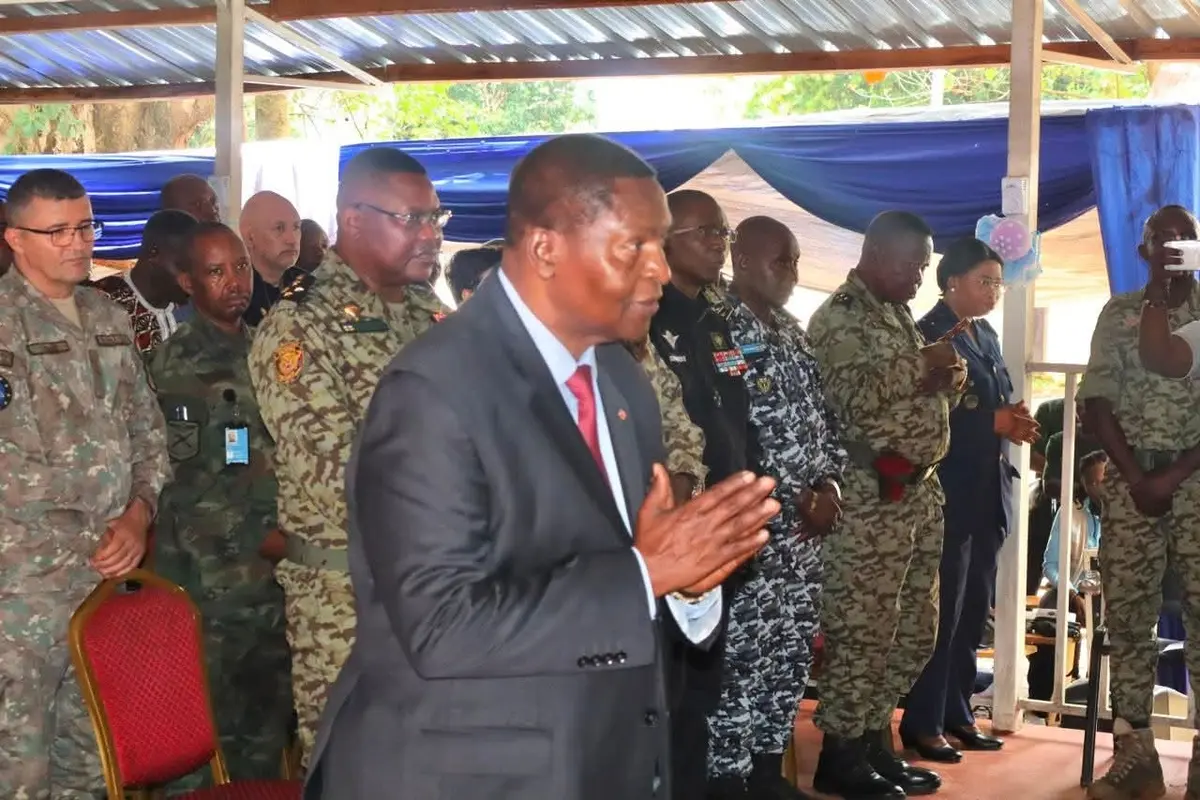
The regime of Faustin-Archange Touadéra is promoting a railway project connecting the Central African Republic with Cameroon, involving a virtual sum of 6 billion dollars. A media-covered ceremony for the laying of the first stone of this railway project occurred in the Central African Republic ahead of the December 28, 2025 election. The initiative aims to enhance regional connectivity, though it has drawn scrutiny regarding its feasibility and timing. This high-profile event, designed to show the project's commencement, took place with significant media coverage, preceding the upcoming election.
Financing and Development Claims
On September 4, 2026, the firm A&S Resources announced it had secured 6 billion dollars in financing from the Export-Import Bank of India. The company, which stated this constituted "« financement sécurisé »" (secured financing), had previously claimed in February 2026 to have obtained major strategic contracts. These contracts reportedly cover mining exploitation, logistics, and long-term sales. A&S Resources further asserts control over 20 billion tons of iron ore, estimated to be valued at 2,500 billion dollars. The firm also claims a daily transport capacity of 250,000 tons, signaling its purported ability to manage large-scale operations. These substantial claims of resource control and operational capability underpin the company's stated role in the ambitious railway endeavor.
Historical Context and Recurring Figures
The proposed railway line, intended to link mining resources in the Central African Republic to the port of Kribi in Cameroon, has a long history of being presented as a symbol of national development. This narrative has been employed for decades as a form of propaganda, aiming to simulate national development. Businessman Saif Durbar has been a recurring figure in such initiatives, having been involved as early as 2009 in a similar project. That earlier plan also aimed to establish a rail route connecting Cameroon, the Central African Republic, and Sudan. Mr. Durbar's past includes imprisonment in France for fraud, specifically in connection with the UraMin affair. His continued involvement in such large-scale infrastructure projects, despite his past legal troubles, raises questions among observers. The consistent re-emergence of this railway concept, often tied to figures like Mr. Durbar, notes a pattern of unfulfilled promises and controversial associations.
Resource Exploitation Allegations
The proposed railway line, stretching 1,350 kilometers, is intended to link mining deposits in the Central African Republic to the Cameroonian coast. This extensive route is designed to facilitate the transport of valuable mineral resources. Critics allege the current regime is utilizing the railway project to rationalize the potential sale of these mining deposits to unspecified interests. The financing for the project, stated as 6 billion dollars, is reportedly sourced from an Indian state bank. This claim originates from A&S Resources' self-promotional bulletins, which described the funding as "« financement sécurisé »" (secured financing). The opacity surrounding the beneficiaries of these potential sales and the nature of the financing has fueled concerns about the project's true objectives. The substantial mineral wealth, particularly the 20 billion tons of iron ore claimed by A&S Resources, makes the motivation behind such a large-scale infrastructure project a subject of intense scrutiny, with many questioning whether it truly serves the national interest or private gain.