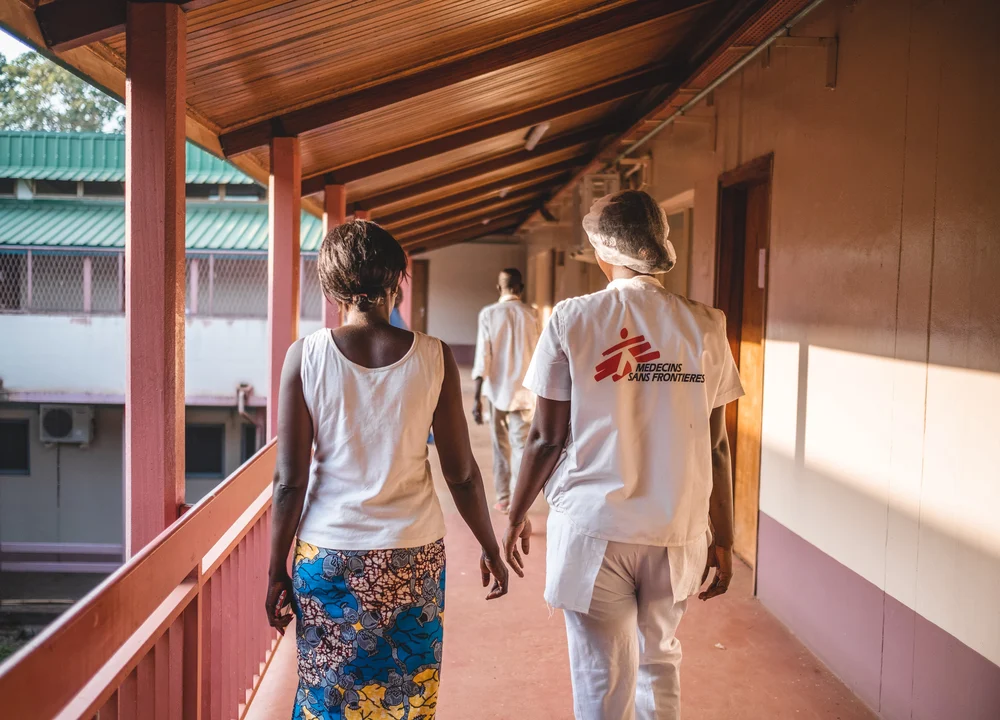
Abel Assaye, director of the Bangui Community Hospital, addressed the 'dossier du jour' as a guest, discussing the significant effects of Médecins Sans Frontières (MSF) withdrawal. Assaye, serving as the principal guest for the day's program, focused specifically on the profound impact on the maternity ward and women's care at the hospital. His remarks came in response to pertinent questions posed by Astrid de Bonheur Kolengué, who noted critical concerns over healthcare provision and its continuity following MSF's departure from the facility. The discussion provided an in-depth look into the operational challenges now faced by the hospital.
MSF Withdrawal's Ripple Effect
The withdrawal of Médecins Sans Frontières (MSF) from the Bangui Community Hospital has created significant operational and financial challenges for the facility, as detailed by its director. Hospital Director Abel Assaye indicated that the departure of MSF has particularly strained the hospital's capacity to maintain essential services across various departments. The organization had been a key partner for an extended period, providing key support for various departments, including the vital maternity ward and full women's care services. Following MSF's exit, the hospital has had to absorb responsibilities that were previously managed and funded by the international medical charity. This transition has necessitated a rapid and full re-evaluation of resource allocation, staffing levels, and overall service delivery models, as the hospital now faces the full burden of providing full care without MSF's direct assistance. The situation has prompted serious concerns regarding the long-term sustainability of medical services for the local population, particularly those most vulnerable.
Strain on Maternity Services
The departure of Médecins Sans Frontières (MSF) has placed a particularly significant and immediate burden on the maternity services at the Bangui Community Hospital, according to Director Abel Assaye. MSF had previously provided substantial and specialized support for the maternity ward, covering key aspects of women's care, including skilled personnel, medical supplies, and operational funding. With their withdrawal, the hospital now faces the complex challenge of independently managing a high volume of obstetric and gynecological cases, which are critical for public health. This shift requires the hospital to reallocate its already limited resources and personnel to ensure continued service delivery for expectant mothers and women requiring gynecological attention, a task made more difficult by the sudden nature of the change. Assaye noted that the hospital is actively working to mitigate the impact of this loss, but the absence of MSF's specialized expertise, dedicated staff, and consistent funding creates a discernible and pressing strain on the system. The continuity of full maternal health services, which are foundational to community well-being, is a primary concern for the administration and medical staff.
Urgent Need for Support
The Bangui Community Hospital faces an urgent need for external assistance to maintain its healthcare services at an acceptable standard following the departure of Médecins Sans Frontières (MSF). Director Abel Assaye emphasized that the hospital is actively seeking new partnerships and funding opportunities to fill the substantial void left by MSF's withdrawal. The institution is working diligently to ensure the continuity of essential services, particularly in critical areas such as the maternity ward and women's care, which were heavily supported by the international organization's resources and expertise. Assaye indicated that while the hospital remains steadfastly committed to serving the population of Bangui with the best possible care, the scale of the challenge necessitates immediate and substantial support from other humanitarian organizations, non-governmental bodies, or government entities. Without such timely intervention, the hospital's capacity could be severely compromised. The long-term sustainability of full medical care for the community depends heavily on securing new resources and collaborations to manage the increased operational burden and ensure that vital services remain accessible to those who need them most.