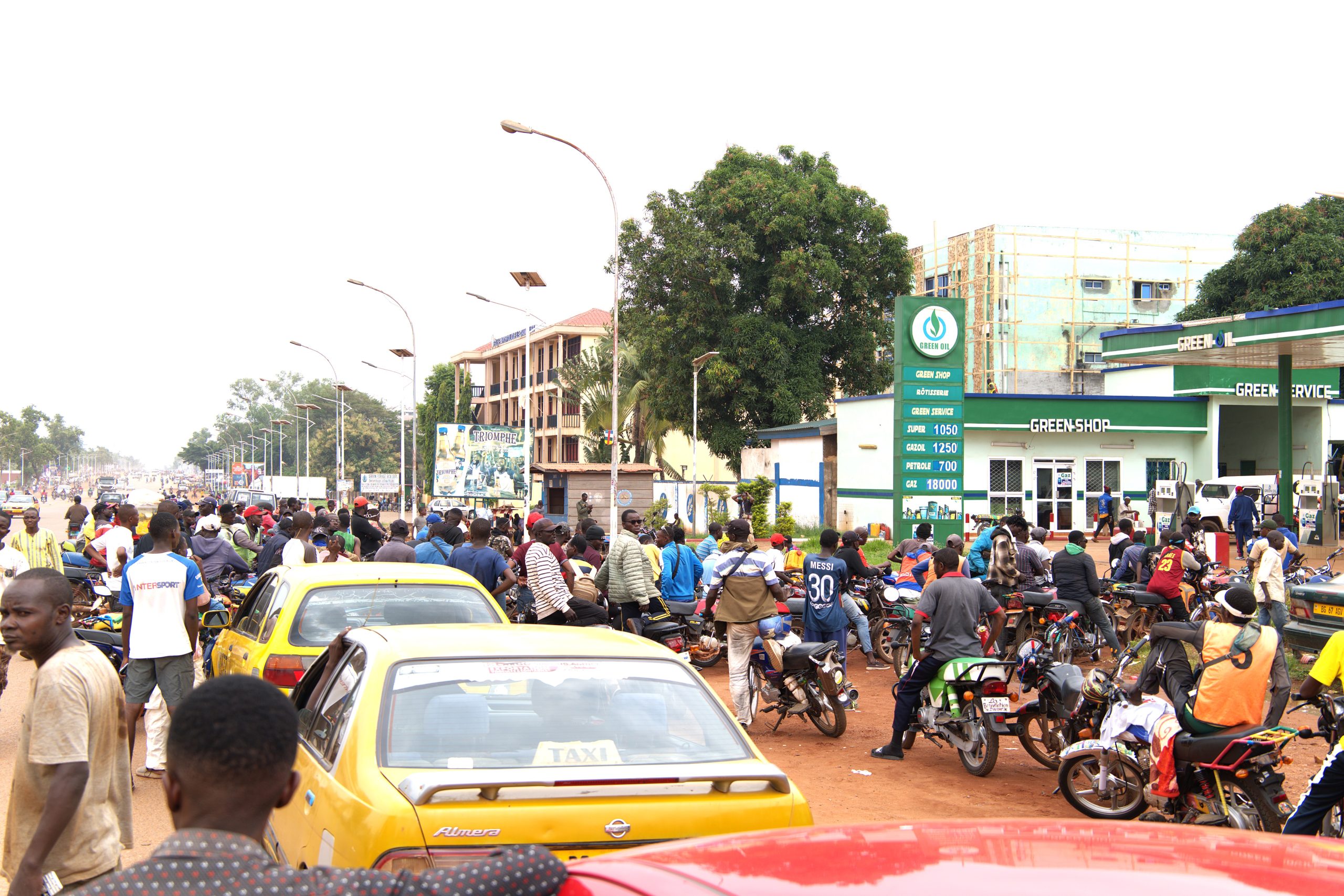
The city of Bangui is currently experiencing a renewed fuel crisis, causing significant disruption to travel within the Centrafrique capital. The shortage has impacted daily commutes and logistics across the city, making daily life increasingly challenging for residents. This marks another instance where the city of Bangui is once again confronted with a fuel crisis, a recurring issue that severely affects the urban landscape and economy. The widespread scarcity has led to considerable inconvenience, hindering both personal and commercial movement throughout the metropolitan area.
Service Station Observations
Edouard Rogossé, a local observer, visited several service stations across the capital to assess the situation firsthand. His observations revealed long queues of vehicles, some stretching for hundreds of meters, as motorists waited for hours hoping for fuel deliveries that often did not materialize. Rogossé meticulously toured several service stations in the capital, documenting the widespread lack of fuel. Many stations displayed "No Fuel" signs, indicating a widespread scarcity that has become a common sight across Bangui. Rogossé noted that the few stations receiving limited supplies quickly became overwhelmed, leading to chaotic scenes as drivers vied for access. The visual evidence from these tours showed the severity of the ongoing fuel shortage impacting daily life in Bangui. The scarcity has forced many residents to alter their routines, with public transport also experiencing significant disruptions due to the lack of available fuel. This critical shortage is disrupting travel for countless individuals and businesses, impacting everything from school runs to goods delivery.
Rising Transport Costs
Voices are rising to deplore the increase in transport prices in Bangui. The ongoing fuel crisis has directly impacted the cost of moving goods and people across the Centrafrique capital. This surge in transport expenses is felt by residents and businesses alike, as fuel scarcity drives up operational costs for vehicles. Public and private transport operators have adjusted their fares in response to the higher prices and limited availability of fuel, creating additional financial strain for the city's inhabitants. The increased costs affect daily commutes and the distribution of essential goods, exacerbating the economic challenges faced by many in Bangui. The ripple effect of these price hikes is evident in various sectors, from food distribution to everyday errands, making basic necessities more expensive and harder to access for the average citizen.
Drivers Dispute Price Hikes
Mototaxi drivers in Bangui have disputed claims of increased transport prices amidst the ongoing fuel crisis. While previous reports noted a surge in fares due to fuel scarcity, some drivers maintain that their charges have not significantly risen. This assertion challenges the perception that the fuel shortage has uniformly led to higher costs for passengers across all modes of transport. Mototaxi drivers specifically refute the claim of increased transport prices, presenting a different perspective on the economic impact of the fuel shortage. The discrepancy in views suggests varying impacts on different segments of the transport sector, with mototaxi operators presenting an alternative perspective on fare adjustments during the crisis. The drivers' position indicates that some transport services may be absorbing increased fuel costs rather than passing them directly to consumers, or that price increases are not as widespread as reported. This creates a complex picture of how the crisis is affecting different parts of Bangui's transportation network and the daily lives of its residents.