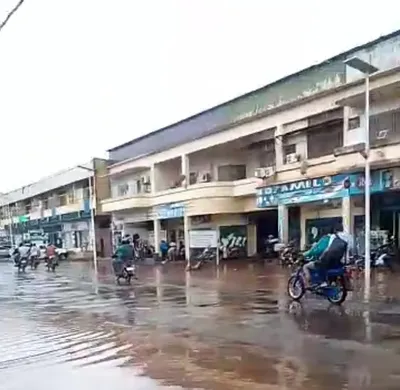
Bangui, Central African Republic, experienced widespread flooding in its city center on Wednesday, May 20, 2026, after a deluge of torrential rain. The heavy downpour completely submerged the Central African capital's downtown area, disrupting daily life and causing significant challenges for residents. The deluge hit the Central African capital on Wednesday, May 20, 2026, transforming familiar streets into impassable waterways and noting severe infrastructural deficiencies.
Flooding Cripples City Streets
The situation on Barthélemy Boganda Avenue, particularly near the Télécel company, is critical as floodwaters have rendered movement extremely difficult. The torrential rains have submerged key urban arteries, making circulation almost impossible in affected areas across the city center. This widespread inundation has brought much of the capital's central business district to a standstill. Vehicles have struggled to navigate the deep water, leading to significant disruption for commuters and businesses. Many residents attempting to travel found themselves stranded, unable to proceed through the inundated streets. The widespread flooding has effectively crippled traffic flow, transforming major routes into impassable waterways and severely impeding daily commerce and public services. The sheer volume of water has created hazardous conditions, forcing many to abandon their vehicles or seek alternative, often lengthy, routes.
Decades of Neglected Infrastructure
Citizens assert that the current government has been in power for a decade without adequately addressing the key problem of drainage pipes in Bangui. This alleged neglect has contributed significantly to the city's vulnerability during heavy rainfall events, turning predictable seasonal downpours into urban crises. Reports indicate that recent road work, intended to improve urban infrastructure, has proven ineffective due to the persistent lack of functional water evacuation systems. Despite investments in road improvements, the absence of proper drainage infrastructure means that even newly paved roads quickly become impassable during downpours, negating the benefits of such public works and exacerbating the flooding problem. This ongoing issue notes a significant infrastructural challenge for the Central African capital, as the underlying problem of water management remains unaddressed. The city's current state, completely submerged, is a stark indicator of these long-standing infrastructural shortcomings.
Public Outrage Over Authorities' Response
Residents and motorists have expressed widespread anger and denounced what they describe as the inaction of current authorities regarding the ongoing flooding crisis in Bangui. The public sentiment reflects profound frustration over the perceived lack of preparedness and response to the torrential rains that have submerged the city center. Many citizens believe that the government has failed to implement effective measures to mitigate the impact of such weather events, despite repeated occurrences. This discontent notes a significant challenge for local governance, as the public directly attributes the current chaos and disruption to official oversight and a perceived neglect of basic urban planning. The criticism centers on the absence of visible efforts to alleviate the immediate impact of the floods or to address the underlying infrastructural deficiencies contributing to the problem, leading to a palpable sense of abandonment among the populace.
Resident Voices and Frustration
The city's slow movement, completely submerged in water, indicates a profound lack of adequate drainage infrastructure, according to observations from affected residents. The extensive flooding has disrupted daily life, with many pointing to the absence of proper water evacuation systems as the primary cause of the widespread inundation. Residents, who routinely face these challenges during the rainy season, are particularly frustrated by the lack of long-term solutions. They argue that the repeated flooding demonstrates a systemic failure to invest in critical urban services, leaving them to bear the brunt of environmental challenges amplified by human oversight. The ongoing struggle to navigate inundated streets and the damage to property further fuel their calls for urgent and effective government intervention.