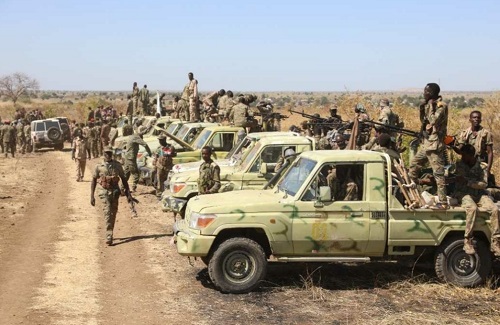
An armed incursion recently occurred in Am-Dafock, located in the Vakaga prefecture, a region that has frequently experienced instability. This recent incursion marked a significant escalation of violence in the area. Government spokesperson Evariste Ngamana stated on Wednesday that the assailants had retreated and claimed the city was under government control. This official declaration aimed to reassure the public about the security situation. However, the town of Am-Dafock remains cut off from Bangui, the capital, raising significant questions about the veracity of the official account and the actual status of the town. The lack of direct communication channels and access makes independent verification difficult, contributing to the uncertainty surrounding the situation.
Devastating Attack and Humanitarian Crisis
The attack on Am-Dafock on Tuesday resulted in at least 28 deaths, according to local sources contacted by Radio Ndeke Luka, painting a grim picture of the violence that unfolded. The incursion caused widespread fear and uncertainty among residents, who were caught in the crossfire and faced immediate threats to their safety. Many sought refuge at the local MINUSCA base for safety, noting the severe lack of secure alternatives for the civilian population. The sheer scale of the casualties shows the brutality of the assault. Fifteen victims have already been buried by the population following the violence, a testament to the immediate impact on the community.
In addition to the fatalities, twenty-five people were injured during the attack, sustaining various degrees of wounds. The most serious cases among the wounded were evacuated to hospitals in Birao and Bria for urgent medical attention, a critical measure given the severity of their conditions. The scope of the destruction included systematic looting of administrative buildings, homes, and critical health structures within the town, severely impacting the local infrastructure and the ability of residents to recover. This extensive damage further exacerbated the humanitarian crisis. Tragically, two children died within the MINUSCA base itself due to a lack of adequate medical care, noting the dire humanitarian situation and the urgent need for medical supplies and personnel in the area. The humanitarian toll of the attack extends beyond immediate casualties, affecting the long-term well-being of the community.
Conflicting Accounts Emerge
Local sources indicate that Am-Dafock remains under the control of the assailants who conducted the recent incursion, directly contradicting official statements. This claim contradicts earlier statements from government spokesperson Evariste Ngamana, who asserted on Wednesday that government forces had regained control of the town. The ongoing lack of access to Am-Dafock from Bangui further complicates efforts to verify the situation on the ground, leaving a vacuum of reliable information. Reports suggest that the armed group continues to occupy the area, maintaining their presence despite official declarations of their retreat. The conflicting accounts highlight the challenges in confirming the status of the remote town following the deadly attack, creating confusion and distrust regarding official reports. The persistence of these conflicting narratives shows the volatile and uncertain reality faced by the residents of Am-Dafock.
Context of Insecurity and Border Porosity
The repeated incursions by armed men into the region are facilitated by the porous nature of the border with Sudan. This geographical characteristic allows for relatively unhindered movement across the frontier, enabling armed groups to operate with greater ease. Such border porosity contributes significantly to the persistent insecurity experienced in areas like Am-Dafock, enabling armed groups to conduct operations and then retreat back across the border. The lack of effective control over these border zones poses a continuous challenge for maintaining stability and preventing cross-border attacks, leading to a cycle of violence and displacement. The ease with which armed elements can traverse the border from Sudan has been a long-standing factor in the regional dynamics of conflict, contributing to the protracted nature of the insecurity. This situation complicates efforts to establish lasting peace and security in the affected territories, as external factors continually fuel internal conflicts. The ongoing cross-border movements continue to destabilize the region, making it difficult for government forces to secure the area effectively.